Drone Solar Panel Inspection Services in India
UAV-mounted radiometric thermal sensors detect hotspots, PID degradation, bypass diode failures, and micro-cracks manual walkthroughs routinely miss. Geo-tagged, IEC 62446-3 compliant reports delivered within 24 hours — zero production downtime.
5+ lakh
Drone Flights Completed
34+ GW
Solar Assets Inspected
2.3+ lakh
Hectares Surveyed
210+ Cr
Saved in Operational Costs
13,000+
Rooftop Surveys Completed
What Is It
Drone Solar Panel Inspection
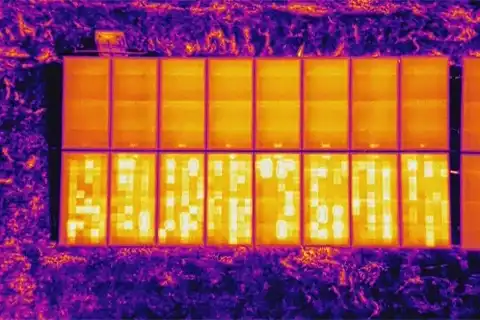
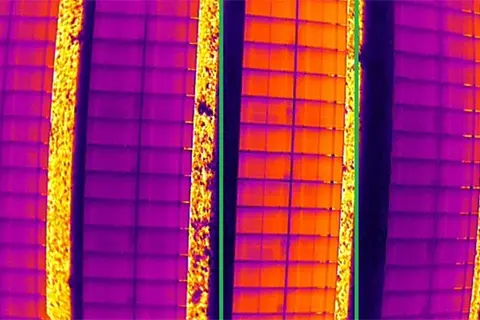
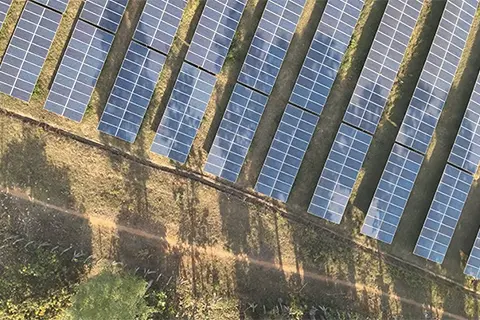
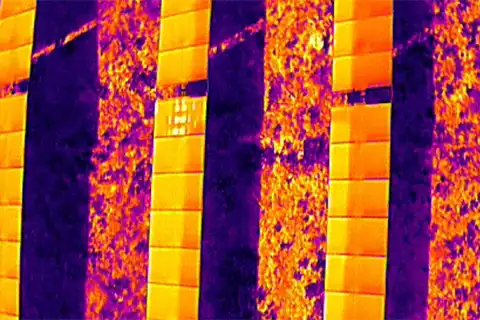
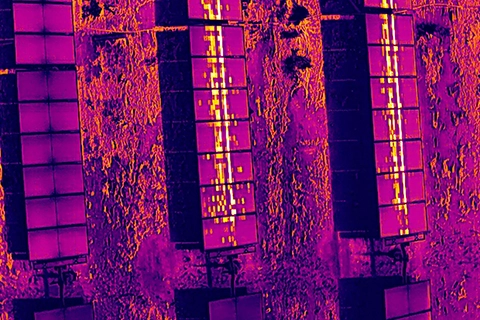
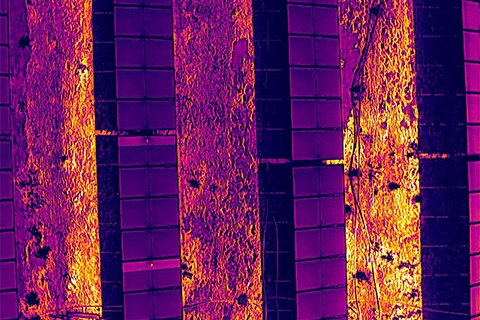
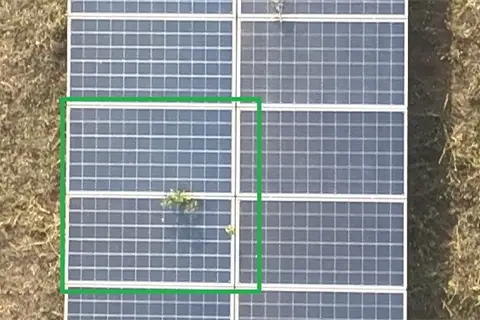
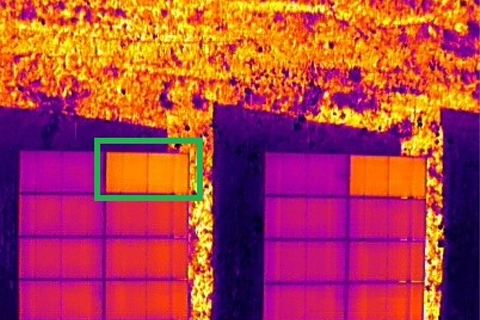
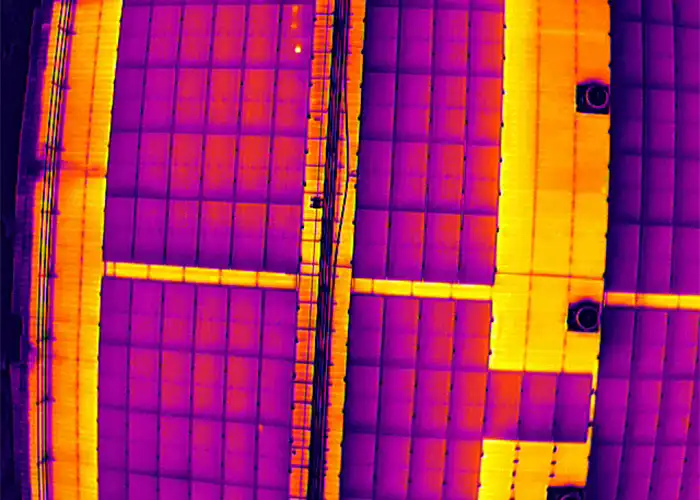
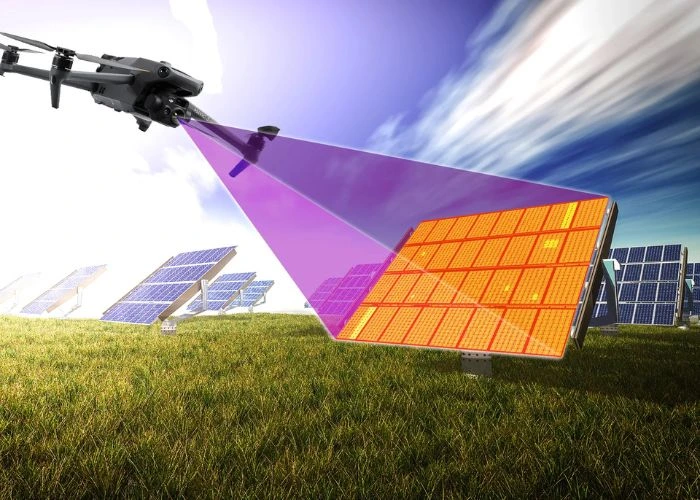
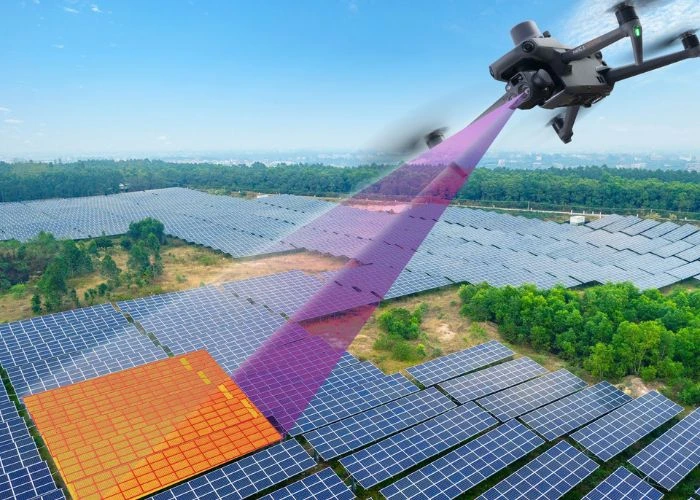
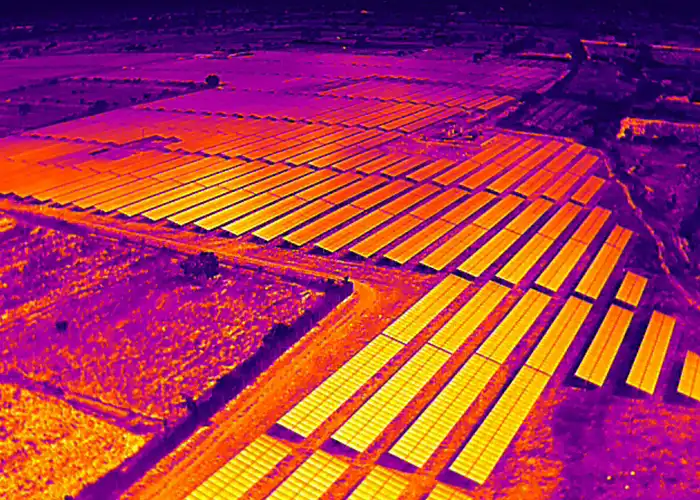
Drone solar panel inspection also called aerial thermography for solar PV or UAV photovoltaic inspection uses radiometric thermal UAVs to scan entire arrays from above, identifying temperature anomalies that indicate module-level defects. DGCA-licensed pilots fly calibrated grid patterns over each panel row, capturing both thermal and visible-light imagery simultaneously. The processed data is delivered as geo-tagged defect maps and IEC 62446-3 compliant reports without any plant shutdown.
Manual walkthroughs identify surface damage only. I-V curve tracing finds electrical faults but requires partial system shutdown and significant field time at scale. Aerial thermography covers utility-scale assets in a fraction of the time, detecting hidden defects both traditional methods routinely miss.
Problem
The Inspection Gap Most O&M Teams Underestimate
Manual inspection works for post-storm visual assessment. It does not work for detecting early-stage hotspots, PID degradation patterns, or bypass diode faults across thousands of modules. Scheduled aerial thermography enables preventive maintenance identifying defects before they compound rather than reactive response after SCADA alerts have already signalled production loss.
String-level underperformance that suppresses performance ratio (PR) is rarely captured by SCADA until cumulative loss becomes operationally significant. Field inspection at utility scale also carries real safety exposure rooftop access requires fall protection and permit-to-work processes.
Unresolved bypass diode failures cause progressive yield loss that compounds over months before SCADA reporting triggers action. Without module-level geo-tagged documentation, lender audits and manufacturer warranty claims lack the evidence base they require.
Radiometric vs Non-Radiometric
Radiometric sensors record absolute temperature values per pixel enabling accurate defect classification by temperature differential. Lesoko deploys sensors with 640×512 resolution and 0.05°C thermal sensitivity, capturing heat anomalies invisible to standard cameras.
Non-radiometric thermal cameras only show relative heat patterns and cannot produce IEC 62446-3 compliant output. The distinction determines whether an inspection report is acceptable to lenders, insurers, and independent technical auditors.
Process
How the inspection process works
Six operational steps from pre-flight planning to report delivery with every stage designed for zero production downtime.
Pre-flight Planning
Site assessment, systematic flight path design, airspace clearance filing for restricted zones. Thermal and visible sensor calibration confirmed before departure.
Thermal + Visual Capture
Radiometric TIFF maps, high-resolution orthomosaics, GPS-accurate geo-tagging at module level. GSD calibrated per site for sub-5 cm/pixel resolution.
Site Risk Assessment
DGCA-compliant safety protocols, insurance verification, plant access coordination with on-site security and operations teams.
Defect Analysis
Engineer-led thermal anomaly detection and classification. Visible-light imagery overlaid on thermal data to eliminate false positives from soiling before the defect register is finalised.
Flight Execution
Licensed pilot operates under IEC 62446-3 compliant irradiance conditions (600+ W/m²). Operations paused if wind speed exceeds 8 m/s or irradiance drops below threshold.
Report Delivery
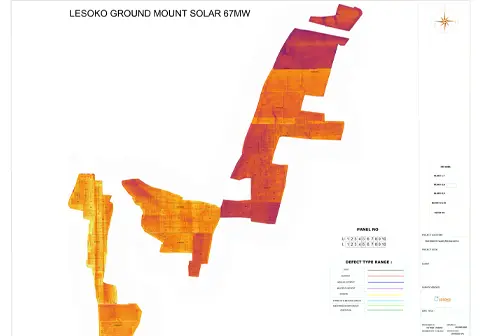
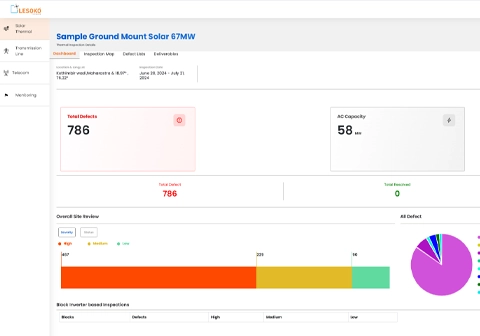
Engineer-verified output delivered within 24 hours of flight completion. Includes geo-tagged defect maps, maintenance prioritisation sheets, and executive inspection dashboard.
Defect Detection
Defects Detected by Aerial Thermography
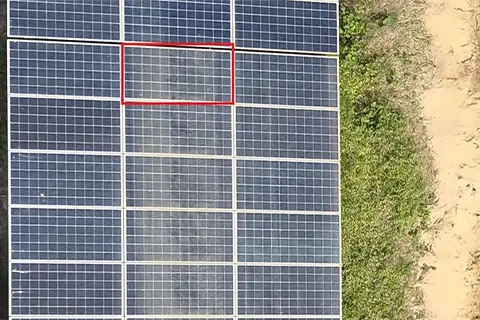
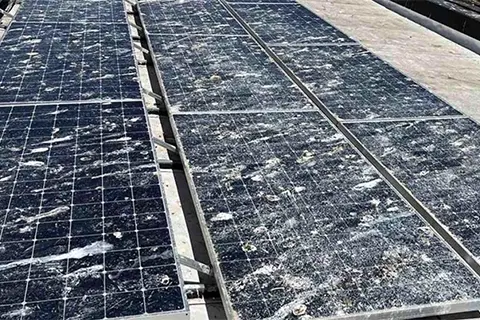
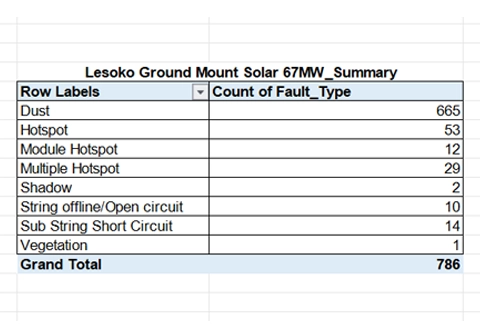
Radiometric thermal sensors identify nine distinct fault categories. All cause measurable production loss or safety risk, and none are visible to the naked eye.
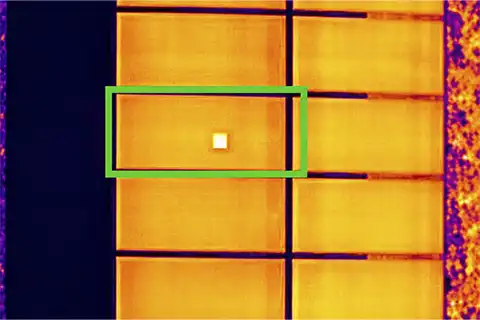
Hotspot
Multiple hotspots
String Reverse Polarity
Open Circuit
Shadow & Shading
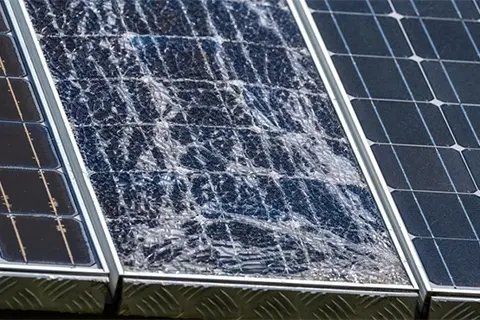
Damage
Dust & Soiling
Vegetation Overgrowth
Bird Droppings
Key Benefits
Why Solar Asset Owners Choose Aerial Thermography
Reasons why O&M managers, EPC heads, and IPP procurement teams specify Lesoko for their solar PV inspection programmes.
Lender-grade documentation
Reports formatted for direct use in technical due diligence. Geo-tagged defect evidence and IEC 62446-3 documentation accepted by lenders and insurance underwriters.
Radiometric data — IEC 62446-3 compliant
Temperature-accurate radiometric output (not visual-only imagery) meeting the sensor and documentation standard for lender audit, warranty claims, and insurance verification.
Module-level GPS coordinates
Every identified anomaly geo-tagged with exact GPS coordinates. Enabling maintenance teams to locate and address defects without re-inspection.
Zero production downtime
Full plant operation continues throughout the thermal survey. Panels remain energised. A technical requirement for reliable defect detection, not a constraint.
Preventive, not reactive, maintenance
Scheduled aerial surveys identify defects before they compound enabling targeted repair before SCADA alerts signal production loss that has already accumulated for months.
Proven ROI across 34+ GW
₹210+ Cr in operational savings enabled across Lesoko's inspection portfolio measured by early defect resolution against estimated revenue loss from unresolved production anomalies.
Engineer-verified 24-hour reporting
Industry standard turnaround is 3–7 days. Lesoko delivers geo-tagged defect maps, maintenance prioritisation sheets, and executive dashboard within 24 hours of flight completion.
DGCA-compliant
Every pilot holds individual DGCA commercial certification. Third-party liability insurance included on every project without exception.
Technical Methodology
Inspection Methodology
Inspections are scheduled during peak irradiance windows 600+ W/m² is the minimum threshold for reliable defect detection. Thermal sensors undergo radiometric calibration before each session; ambient temperature, wind speed, and humidity are logged throughout the flight.
Ground sampling distance (GSD) is calibrated per site flight altitude is adjusted to achieve sub-5 cm/pixel resolution at module level, enabling individual cell defect identification rather than row-level anomaly detection only. Flight operations are suspended when wind speed exceeds 8 m/s beyond this threshold, radiometric sensor accuracy and UAV flight stability are both compromised.
Post-flight, thermal and visible-light imagery is processed into georeferenced orthomosaics using photogrammetry software. Defect classification follows IEC 62446-3 severity tiers. Engineer-led thermal anomaly detection eliminates false positives before the defect register is finalised. Every anomaly is reviewed by a qualified engineer before entering the final report.
Site-Specific Variables That Affect Thermal Data Quality
Soiling False Positives
Soiling deposits closely resemble early-stage hotspot defects in thermal imagery. Engineers overlay visible-light imagery over thermal data to eliminate soiling-induced false positives before the defect report is issued.
Tracker Tilt & Single-Axis Systems
Single-axis tracker panels require inspection at fixed tilt angles during peak irradiance. Tracker position is coordinated with plant operations before flight scheduling on all tracker-equipped sites.
Sun Angle & Irradiance Timing
Radiometric data quality degrades when sun angle is below 30° from horizontal. Inspection flights are scheduled around peak irradiance windows typically mid-morning to early afternoon.
Inverter Mismatch Overlap
Inverter mismatch signatures can overlap with electrical fault thermal patterns. All Lesoko reports include engineer-reviewed classification before final defect register issuance to distinguish these accurately.
Audience
Who This Service Is For
Solar O&M Managers
Asset Performance & Maintenance Teams
- Responsible for asset health, maintenance scheduling, and yield optimisation across operational sites
- Manual inspection creates coverage gaps and documentation weaknesses at utility scale
- Geo-tagged defect reports integrate directly into existing maintenance workflow systems
- Preventive defect resolution before cumulative yield loss triggers SCADA alerts
EPC Heads — Renewable Energy
Commissioning & Handover Documentation
- Module-level documentation for commissioning sign-off, lender acceptance, and warranty validation before handover
- Radiometric TIFF and orthomosaic outputs meet standard EPC handover documentation requirements
- Reports formatted for lender technical due diligence including IEC 62446-3 documentation
- 24-hour report turnaround supports tight commissioning timelines where delays carry penalty clauses
Utility Procurement — IPPs, DISCOMs
Multi-Site Portfolio Management
- Consistent vendor quality and consolidated reporting across multi-state portfolios
- Standardised deliverables across all assets same report format for every site regardless of state
- Single-vendor structure reduces procurement overhead for multi-state inspection programmes
- Portfolio inspection scheduling coordinated across sites to optimise mobilisation and minimise per-MW cost
Coverage
Pan-India Deployment Across Major Solar Clusters
Lesoko operates with deployment capability within 48 hours for sites above 10 MW. Completed inspection projects span Tamil Nadu, Karnataka, Gujarat, Rajasthan, Maharashtra, Andhra Pradesh, and Telangana.
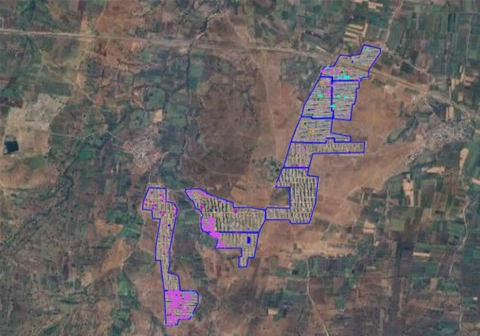
Covered solar parks include Charanka (Gujarat), Bhadla (Rajasthan), Pavagada (Karnataka), Kurnool Ultra Mega Solar Park (Andhra Pradesh), and Kamuthi Solar Power Project (Tamil Nadu).
Same-day deployment is available in Chennai, Bengaluru, and Hyderabad for urgent inspection requirements.
Regional Note: Arid vs Coastal Sites
Dust accumulation patterns vary significantly between arid sites (Rajasthan, Gujarat) and coastal installations (Tamil Nadu, Kerala). Arid sites generate higher soiling false-positive rates; coastal sites carry elevated junction box corrosion risk. Inspection protocols are adjusted per region to account for these operational differences.
Monsoon Season Restrictions
Drone operations across peninsular India are restricted June–September due to monsoon wind and rainfall. Pre-monsoon (March–May) and post-monsoon (October–November) windows deliver the most operationally useful data. Portfolio operators should schedule inspections during these windows.
- Gujarat
- Rajasthan
- Tamil Nadu
- Karnataka
- Maharashtra
- Andhra Pradesh
- Madhya Pradesh
- Uttar Pradesh
- Odisha
- Punjab
- Haryana
- Telangana
- Bihar
- Jharkhand
- Chhattisgarh
- West Bengal
- Kerala
- Assam
Pricing
Inspection cost and pricing structure
Drone solar panel inspection pricing is project-specific. No two sites share identical requirements. Larger sites benefit from lower per-MW cost due to deployment efficiency and multi-site portfolios within a region can reduce costs further.
Sites within the same state or region can be bundled into a single mobilisation reducing per-MW cost considerably across the portfolio. Inspection spend is typically a small fraction of the operational savings enabled by early defect detection. ₹210 Cr+ in operational savings has been enabled across Lesoko’s inspection portfolio measured by early defect resolution against estimated revenue loss from unresolved production anomalies. Inspection reports are formatted for direct use in lender technical due diligence, reducing documentation overhead for EPC and IPP procurement teams.
Pricing variables that determine inspection scope and cost
- MW Capacity: Larger sites benefit from lower per-MW cost due to deployment efficiency. Economies of scale apply above 10 MW.
- Terrain & Access: Remote or hilly terrain increases logistics and mobilisation overhead. Restricted airspace adds lead time.
- Report Depth: Standard defect list vs full radiometric TIFF + orthomosaic + geo-tagged dataset + executive dashboard.
- Travel Requirements: Remote sites in Rajasthan and Gujarat require multi-day deployments. Same-state bundling reduces per-MW cost.
- Turnaround Timeline: Standard 24-hour report delivery. Expedited same-day processing available for urgent requirements.
- Portfolio Bundling: Sites within the same state bundled into a single mobilisation — significantly reduces per-MW cost at scale.
Measurable Impact.
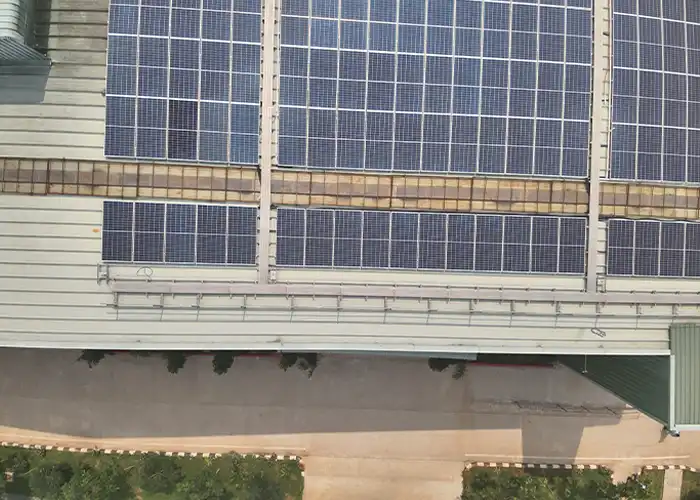
A 600KW rooftop solar power plant was inspected after reporting a steady drop in output. Regular dust accumulation was the primary suspected cause. Lesoko's drone flew for just 1.5 hours and delivered cell-level defect mapping across all 1,430 modules — enabling the O&M team to take same-day action.
Outcomes Achieved
Defect Breakdown — % of 600KW
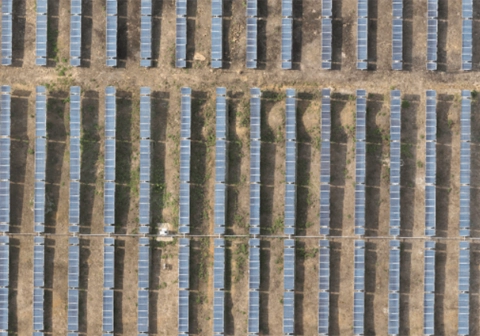
A major 60MW ground-mount plant in Rajasthan — prone to vegetation due to its environment — required thermal inspection as part of an asset transfer due-diligence process. Lesoko's drone covered all 1,90,476 modules over 36 hours, delivering a comprehensive module-level repair/replace report.
Outcomes Achieved
Defect Breakdown — % of 60MW
A 31.4MW floating solar installation experienced persistent performance issues and suspected cable damage from aquatic wildlife (turtles, fish). Lesoko was deployed on a recurring basis to provide rapid defect data. Despite modules being cleaned the day before inspection, bird drop defects accounted for 11.4% of total plant capacity.
Outcomes Achieved
Defect Breakdown — % of 31.4MW
Solar Panel Inspections Video Coverage
Our Amazing Clients


What Solar Plant Operators Say
We have had the opportunity to collaborate with Lesoko Technologies Pvt. Ltd. on multiple projects involving Rooftop Surveys, Topography Mapping, and Solar Thermal Inspection services. The experience of working with your team has been highly professional and technically impressive. Your team consistently delivered accurate survey data, high-quality mapping outputs, and detailed thermal inspection reports, which played a crucial role in project planning, defect identification, and performance assessment. The clarity of deliverables, strong technical expertise, and efficient coordination demonstrated by your team ensured smooth project execution across all assignments. Based on our experience, Lesoko Technologies Pvt. Ltd. has proven to be a dependable and technically capable partner for solar survey and inspection services, contributing significantly to the successful execution of our solar projects.
Deliverables
What Every Inspection Includes
Radiometric TIFF Maps
High-Resolution Orthomosaics
Maintenance Prioritisation Sheets
Thermal Anomaly Maps
Get Free Quote in 24 Hours
Phone/ Whatsapp
+91 78457 26375/ 7845726374
Email Us
sales@lesoko.in
Head Office
Get Your Inspection Quote
Frequently Asked Questions
Drone thermal inspection detects hotspots, PID (Potential Induced Degradation), micro-cracks, bypass diode failures, string-level mismatch, soiling anomalies, junction box overheating, delamination, and panel-level corrosion at junction boxes. These defects cause substantial power loss and in some cases present fire risk. Radiometric sensors detect temperature differences invisible to the naked eye identifying significantly more fault types than manual visual inspection or non-radiometric cameras.
No. Aerial thermography operates while panels remain fully energised and under load. Accurate thermal defect detection requires active generation. It is a technical requirement, not a constraint. Panels must be energised because hotspots, bypass diode failures, and PID signatures produce detectable heat anomalies only when the module is under electrical load. A de-energised panel produces no thermal differential, making defect detection technically impossible. This eliminates the revenue loss associated with partial or full shutdowns required by some traditional inspection methods.
Radiometric thermal drones with 640×512 sensors and 0.05°C thermal sensitivity detect temperature differentials as small as a fraction of a degree. At sub-5 cm/pixel GSD, individual cell-level defects within a standard 2m × 1m module are distinguishable. False positive rates are minimised through engineer review visible-light imagery is overlaid on thermal data to separate soiling-induced heat signatures from genuine electrical faults before the defect register is finalised. Accuracy is also dependent on irradiance conditions: inspections conducted below 600 W/m² carry elevated false-negative risk.
Visual (RGB) drone inspection detects physical damage glass cracks, breakage, soiling, vegetation overgrowth, bird droppings, and structural deformation — visible to the camera. Thermal drone inspection using radiometric sensors detects electrical and performance faults hotspots, bypass diode failures, PID, micro-cracks, delamination, and junction box corrosion that produce heat anomalies invisible to standard cameras. Both inspection types address different fault categories and are complementary, not interchangeable. Lesoko captures thermal and RGB imagery simultaneously on every inspection flight, delivering both defect categories in a single pass without additional flight time.
IEC 62446-3 is the international standard governing thermographic inspection of photovoltaic systems. It defines minimum irradiance thresholds (600+ W/m²), maximum acceptable wind speed and cloud cover, and required documentation for inspection reports. Reports produced under IEC 62446-3 protocols are recognised by lenders, insurance underwriters, and independent technical auditors for due diligence and warranty claim purposes. Non-compliant reports regardless of image quality may be rejected in lender audit processes. Procurement teams evaluating vendors for lender-audit-grade inspections should require a sample report before contract sign-off to verify compliance.
Deployment within 48 hours for sites above 10 MW across India. Same-day deployment is available in Chennai, Bengaluru, and Hyderabad for urgent requirements. Restricted-airspace sites near airports or defence installations require a minimum 10-day lead time to complete DGCA permission filing. Remote sites in Rajasthan or Gujarat require multi-day logistical planning factor this into project timelines.
Procurement teams evaluating vendors for lender-audit-grade inspections should require a sample report before contract sign-off to verify compliance with these documentation standards.