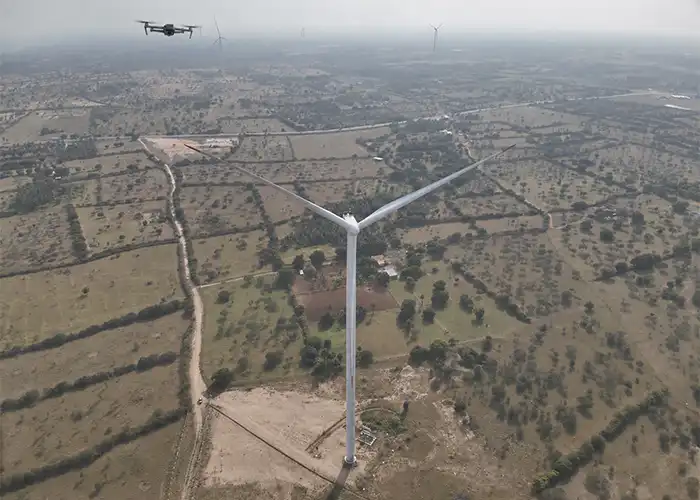
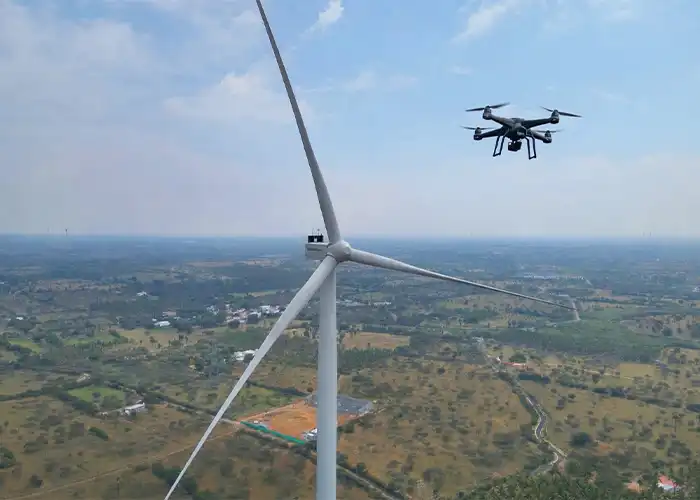
Drone Wind Turbine Inspection in India — No Shutdown, Full Blade Coverage
DGCA-certified pilots fly radiometric thermal and 4K visual surveys across every blade surface, without stopping the turbine. Geotagged, manufacturer-format defect reports delivered within 24 hours.
Reviewed for technical accuracy by Lesoko’s DGCA-certified inspection engineering team, in line with IEC 61400 and DNV GL blade-inspection reference frameworks.
5+ lakh
Drone Flights Completed
40–60%
Cost reduction vs specialist ground crew
100%
Blade surface coverage all surfaces, geotagged
24 hr
Report delivery after flight completion
No
Turbine shutdown required
What Is Drone Wind Turbine Inspection?
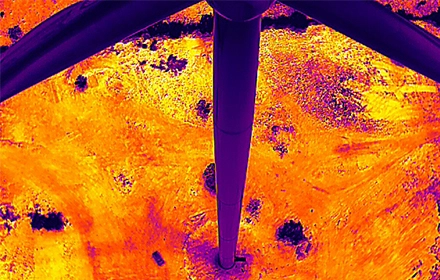
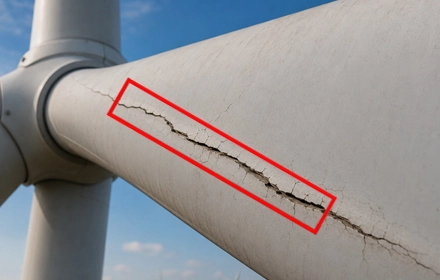
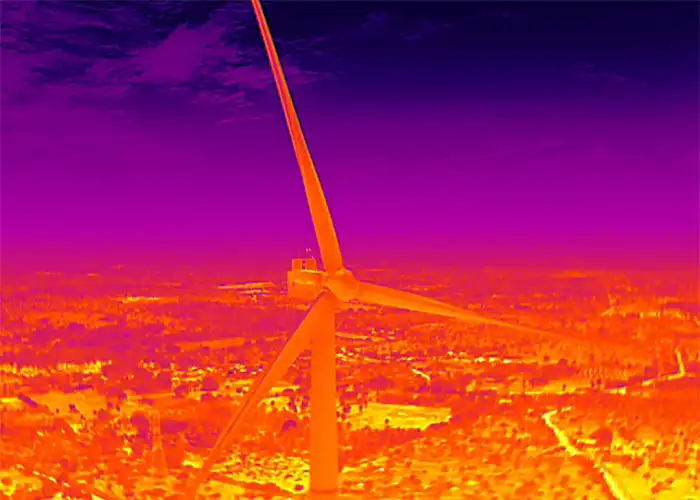
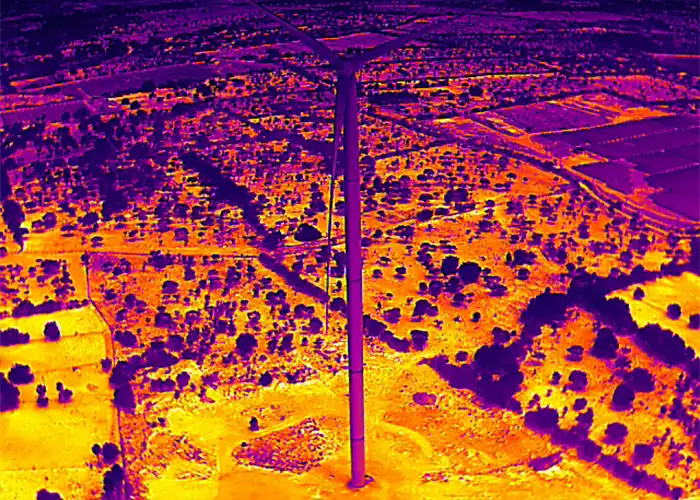
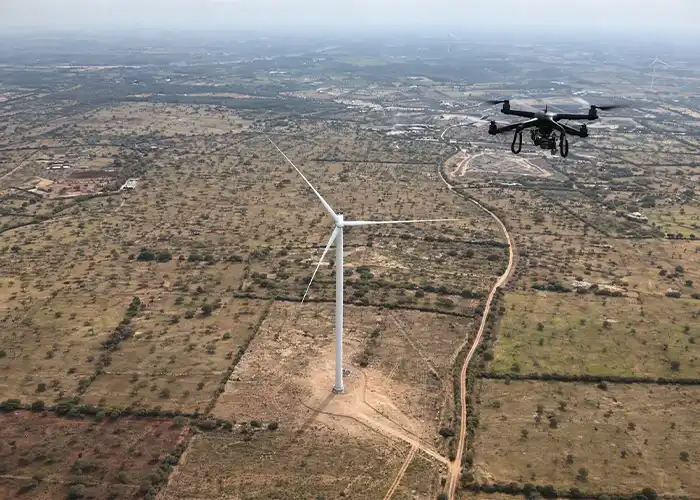
Drone wind turbine inspection uses DGCA-licensed unmanned aircraft equipped with radiometric thermal sensors and 4K visual cameras to assess blades, nacelle, tower, and hub without rope access or turbine shutdown. The aircraft captures visual and thermal data across all blade surfaces, geotagging each detected defect to GPS coordinates. Deliverables are structured in manufacturer-format reports covering leading-edge erosion (LEE), delamination, surface cracks, lightning damage, and thermal hotspots.
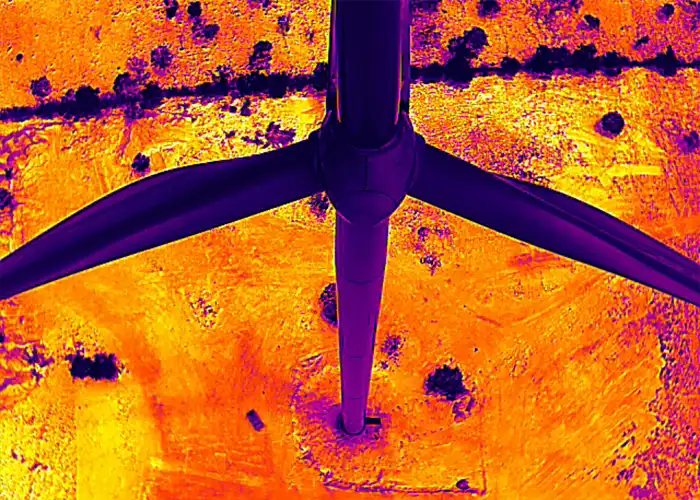
The thermal layer is what separates aerial inspection from a simple photo survey: radiometric sensors detect temperature variation across the blade surface, and that variation indicates subsurface anomalies moisture ingress, disbonding, early-stage delamination invisible to a visual-only inspection. A certified engineer then reviews flagged zones to confirm genuine defects against imaging artefacts like soiling or sun glare, before the finding is logged.
Compared to rope-access inspection, which requires 6–12 hours per turbine with crews working at 80–120 m and the turbine fully shut down, aerial survey compresses the same coverage into a single same-day visit with no shutdown required directly protecting Annual Energy Production (AEP) during the inspection window itself.
The Problem
Why Conventional Turbine Inspection Falls Short
Rope-access crews working at 80–120 m altitude for 6–12 hours per turbine, with the turbine shut down for the full duration, translate into weeks of lost inspection time and generation downtime across a 50-turbine wind farm. Undetected leading-edge erosion degrades aerodynamic performance progressively, reducing Capacity Utilisation Factor (CUF) and AEP before the drop is visible in SCADA dashboards by which point structural repair costs significantly more than early intervention would have.
Workflow
How Drone Wind Turbine Inspection Works
A six-step process from site planning to engineer-reviewed report delivery, with reports issued on a fast, structured turnaround after flight.
Pre-flight Planning
Site assessment, blade orientation mapping, and regulatory clearance submission completed before mobilisation.
Data Capture
4K visual imagery and radiometric thermal data captured simultaneously, with GPS-accurate geotagging per defect zone.
Site Risk Assessment
DGCA-compliant safety protocols, real-time wind speed monitoring, and insurance documentation verified before flight.
Defect Analysis
AI-assisted anomaly detection followed by certified engineer review, differentiating genuine erosion or delamination from surface soiling.
Flight Execution
A licensed pilot operates the drone at minimum safe distance across all blade surfaces, timed to avoid understated thermal readings from low early-morning irradiance.
Report Delivery
Manufacturer-format reports with maintenance prioritisation sheets delivered on a fast, structured turnaround after flight completion.
Detection
Blade Defects Detected by Aerial Survey
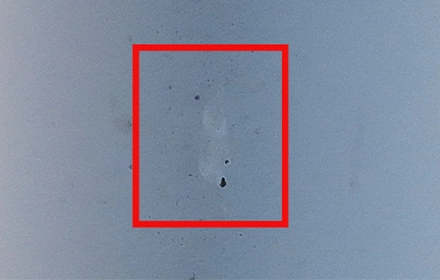
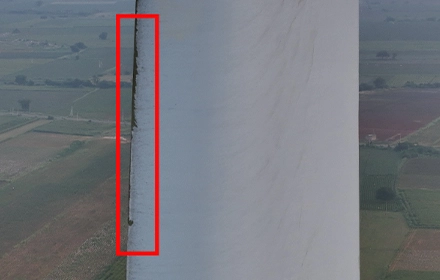
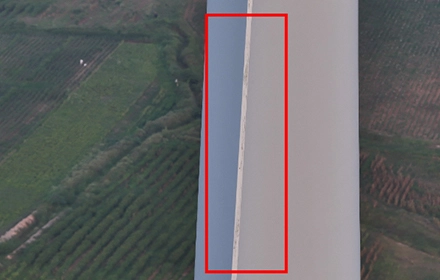
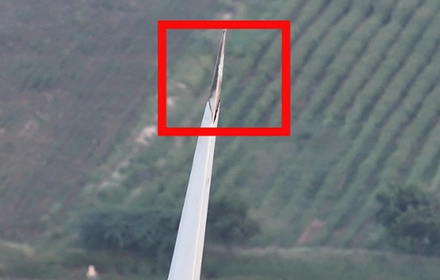
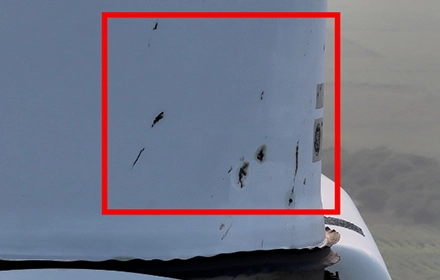
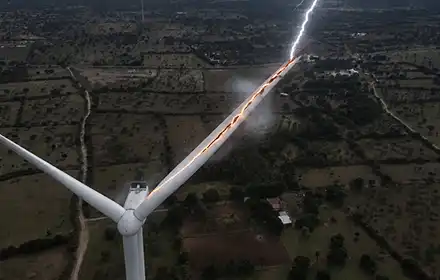
Aerial blade thermography with certified engineer review covers structural and surface defects, including subsurface anomalies invisible to visual-only inspection.
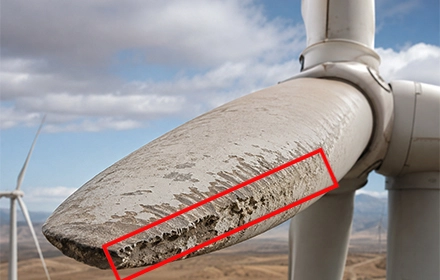
Leading-Edge Erosion (LEE)
Thermal Hotspot
Oil Pollution
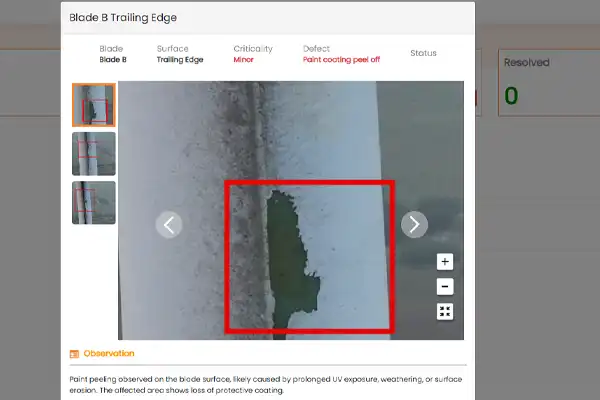
Paint Peel-off
Surface Crack
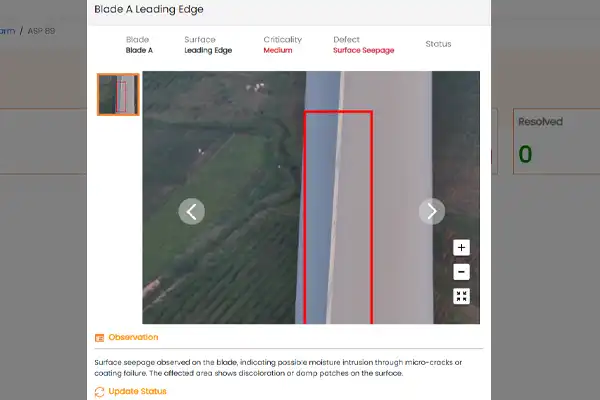
Surface Seepage
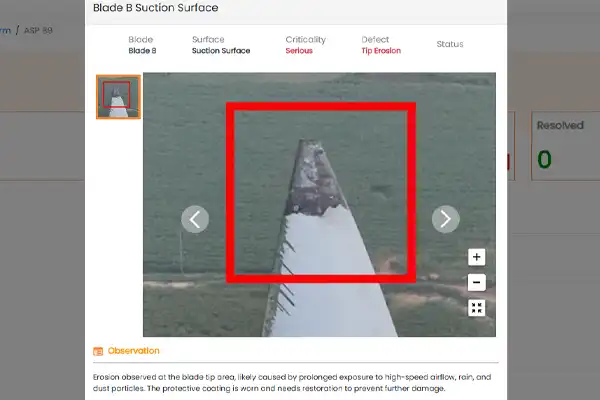
Tip Erosion
Wearing
Lightning Damage
Severity Framework
How Defects Are Classified by Severity
Severity 1
Monitor only
Surface soiling, minor gelcoat discolouration, or cosmetic marks with no measurable aerodynamic or structural impact. Logged for baseline tracking; no action required this cycle.
Severity 2
Plan for next scheduled window
Early-stage LEE, hairline coating cracks, or isolated pinholes. Repair is inexpensive at this stage and typically scheduled into the next pre- or post-monsoon maintenance window.
Severity 3
Repair within 3–4 months
Progressed erosion, visible surface cracking, or early delamination indicators. Left unaddressed, these typically escalate to structural repair costs within one to two seasons.
Severity 4
Repair within 3 months
Tip erosion with exposed substrate, confirmed delamination, or lightning-strike thermal signatures. Flagged for priority action to prevent structural failure or unplanned downtime.
Technical Methodology
How Aerial Blade Thermography Works
Drone proximity flight protocol positions sensors at minimum safe distance from blade surfaces across all three blades per turbine. Radiometric thermal sensors operating at a minimum resolution of 640×512 capture temperature-accurate data per pixel, enabling defect mapping beyond what visual-only systems detect including across the spar cap and shear web zones, structural failure paths that visual inspection alone cannot reach. Optimal thermography requires irradiance above 600 W/m², wind speeds within site-specific operational limits, and time-of-day scheduling that avoids nacelle shadow interference, which can otherwise distort thermal readings.
Image processing generates orthomosaic blade maps with radiometric correction applied. AI-assisted detection flags candidate anomalies; a certified engineer then reviews each one to differentiate LEE from soiling, delamination from surface marks, and genuine hotspots from imaging artefacts.
Wind farms in Tamil Nadu and Karnataka face monsoon restrictions from June through September pre-monsoon inspection cycles in April–May and post-monsoon surveys in October–November are the standard scheduling windows. Coastal sites like Muppandal in Tamil Nadu and Kutch in Gujarat experience salt mist deposition that can mimic early-stage erosion under visual inspection; thermal differentiation by a certified engineer is required to distinguish salt-induced temperature variation from genuine delamination or erosion.
Compliance and Safety
All Lesoko pilots hold DGCA certification for commercial drone operations under UAS Rules 2021, with no subcontracting every inspection is flown by a certified, insured in-house pilot. Full liability insurance coverage is included on all projects, and NDA options are available for sensitive site data and inspection records. Reports are structured to align with IEC 61400 and DNV GL blade-inspection reference frameworks, supporting both OEM warranty submission and lender technical auditor (LTA) review.
Who Uses Lesoko Wind Turbine Inspection
Wind O&M Managers
Rope-access inspection is costly, slow, and misses subsurface defects that aerial thermography reliably detects in a single survey. Where SCADA dashboards show unexplained CUF deviation, aerial inspection identifies whether blade condition — rather than wind resource variability — is the root cause.
EPC Heads, Wind Energy Projects
OEM warranty transfer requires documented baseline inspection at commissioning. Geotagged imagery and radiometric data provide handover documentation that manual inspection cannot reliably generate.
IPPs and Utility Procurement Teams
Manual climbing inspection scales poorly across large portfolios. A single pan-India vendor with consistent quality and meaningfully lower per-turbine cost changes fleet maintenance economics.
Lender Technical Auditors and Independent Engineers
LTAs require documented baseline and periodic inspection records to validate asset condition for project finance and refinancing. Subjective rope-access reports without GPS coordinates are increasingly rejected by LTA review teams.
Field Case Study
WTG Blade Inspection — 1.7 MW Wind Turbine, Andhra Pradesh
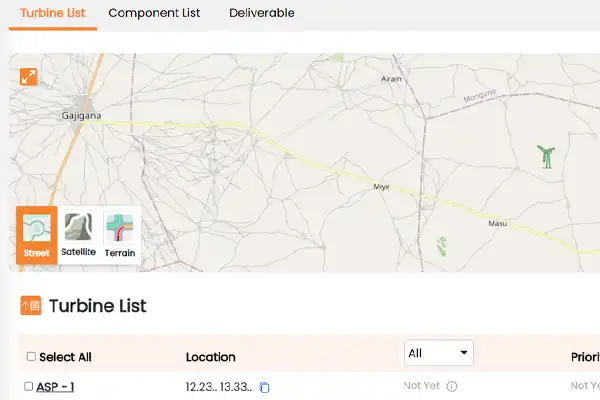
GE 1.7 turbine, 50.2 m blades, inspected 26 Mar 2026. Six anomalies logged across all three blades — no stoppage, geotagged anomaly records delivered within 7 days.
Turbine Model
GE 1.7 MW
Blade Length
50.2 m
Inspection Date
26 Mar 2026
Anomalies Found
6 across 3 blades
| Anomaly ID | Blade | Location | Defect | Severity | Action |
|---|---|---|---|---|---|
| 110001 | Blade A | Leading Edge | Erosion | 3 · Medium | Repair in 3–4 months |
| 110002 | Blade A | Pressure Surface | Tip Erosion | 4 · Serious | Repair in 3 months |
| 110003 | Blade B | Leading Edge | Erosion | 3 · Medium | Repair in 3–4 months |
| 110004 | Blade B | Pressure Surface | Tip Erosion | 4 · Serious | Repair in 3 months |
| 110005 | Blade C | Leading Edge | Erosion | 3 · Medium | Repair in 3–4 months |
| 110006 | Blade C | Suction Surface | Tip Erosion | 4 · Serious | Repair in 3 months |
Finding
Leading-edge erosion and tip erosion detected across all three blades. Severity 4 tip erosion flagged for repair within 3 months; medium-severity erosion within 3–4 months. The turbine continued operation — no stoppage required.
- Gujarat
- Rajasthan
- Tamil Nadu
- Karnataka
- Maharashtra
- Andhra Pradesh
- Madhya Pradesh
- Uttar Pradesh
- Odisha
- Punjab
- Haryana
- Telangana
- Bihar
- Jharkhand
- Chhattisgarh
- West Bengal
- Kerala
- Assam
Pan-India Operations
Drone Wind Turbine Inspection Coverage Across India
Pan-India deployment with capability within 48 hours for wind farms above 10 turbines. Same-day deployment is available in Chennai, Bengaluru, and Hyderabad for urgent requirements. Lesoko has completed surveys at wind assets in the Muppandal wind zone (Tamil Nadu), the Jaisalmer Wind Park corridor (Rajasthan), and Kutch coastal wind farms (Gujarat).
Monsoon scheduling: the Southwest monsoon (June–September) restricts inspection windows across Tamil Nadu and Karnataka wind corridors. Lesoko deploys proactively in the February–April pre-monsoon window for operators planning annual O&M cycles.
Pricing
Cost and Pricing: Drone Wind Turbine Inspection
Pricing depends on turbine count and total MW capacity, site location and mobilisation requirements, inspection scope (blade-only vs. full turbine including tower, nacelle, hub), terrain and accessibility, report depth (standard vs. forensic), urgency, and monsoon-window scheduling. Wind farms with larger fleets typically see lower per-turbine pricing due to fixed mobilisation costs spread across more units.
Beyond one-time inspection, Lesoko offers annual and multi-year inspection contracts for wind farms requiring repeat LEE progression tracking. Contract-based scheduling locks in pre-monsoon and post-monsoon windows in advance, removing the need to re-procure each cycle useful for O&M teams working to a fixed annual maintenance budget.
- Turbine count and total MW capacity
- Site location and travel / mobilisation requirements
- Inspection scope: blade-only vs full turbine (tower, nacelle, hub)
- Terrain and accessibility (onshore vs coastal, hilly corridor)
- Report depth: standard manufacturer-format vs forensic investigation
- Urgency: standard turnaround vs expedited 24-hour delivery
- Wind speed windows and site-specific flight constraints
- Monsoon scheduling: pre-monsoon (Apr–May) vs post-monsoon (Oct–Nov) windows
Watch How Lesoko Inspects a Wind Turbine
Our Amazing Clients


Deliverables
What Every Inspection Includes
Radiometric TIFF
Geotagged Defect Reports
Maintenance Prioritisation Sheets
Ready to Protect Your Wind Assets?
Phone/ Whatsapp
+91 78457 26375
Email Us
sales@lesoko.in
Head Office
Request Inspection Quote
Frequently Asked Questions
Drone wind turbine inspection detects leading-edge erosion (LEE), tip erosion, surface cracks, delamination, lightning damage, thermal hotspots, oil seepage, and paint peel-off. Radiometric thermal sensors identify subsurface anomalies moisture ingress, disbonding, delamination in spar cap and shear web zones invisible to visual-only inspection, which manual climbing methods routinely miss.
Drone wind turbine inspection is completed in a single same-day visit per turbine, compared to 6–12 hours using rope-access crews. Turbines remain operational with no shutdown required during the survey itself. A 50-turbine wind farm can be fully inspected within days rather than the weeks conventional inspection requires.
Pricing depends on turbine count, site location, terrain accessibility, inspection scope, and report depth. Larger turbine fleets typically receive lower per-turbine pricing due to fixed mobilisation costs spread across more units. Drone inspection generally costs meaningfully less than manual climbing methods once specialist crew costs, equipment, and shutdown downtime are factored in.
Wind turbine blades should be inspected annually at minimum for operational wind farms, with immediate inspection after extreme weather events such as storms, hail, or lightning strikes. High-capacity assets above 50 turbines often benefit from bi-annual surveys to catch early-stage erosion before it escalates to structural delamination.
Findings are logged on a four-tier scale: Severity 1 (cosmetic, monitor only), Severity 2 (minor, plan for next maintenance window), Severity 3 (medium, repair within 3–4 months), and Severity 4 (serious, repair within 3 months). This lets O&M teams prioritise repair budget by urgency rather than treating every flagged finding equally.
Yes. A commissioning baseline inspection before COD documents as-built blade condition and catches manufacturing or transport-related defects early. This baseline record is the reference point used for all future warranty claims, insurance discussions, and year-over-year erosion tracking.
No. Drone inspection operates without turbine shutdown blades remain in normal operating position during the survey. For close-proximity blade imaging, turbines may briefly be parked at a defined orientation for under five minutes per turbine, a standard O&M parked position that minimises generation impact. Some other inspection providers require the turbine to be fully stopped for the entire imaging session; Lesoko does not.
Yes. Reports are structured to align with OEM blade-inspection documentation requirements for all four manufacturers. Geotagged TIFF thermal data and GPS defect registers are provided in formats accepted for OEM warranty submissions and LTA audit packages, referencing IEC 61400 and DNV GL guidelines for report structure.
India’s largest wind energy states are Tamil Nadu, Gujarat, Rajasthan, Karnataka, Maharashtra, and Andhra Pradesh, together accounting for over 90% of India’s installed wind capacity. Lesoko operates across all of these states with licensed pilots and local deployment capability.
Yes. Lesoko participates in RFP-based procurement and vendor empanelment for wind asset inspection contracts. DGCA pilot certifications, liability insurance documentation, OEM-format sample reports, and scope-of-work templates are available on request for tender submissions.
Deliverables include PDF inspection reports, radiometric TIFF thermal data, high-resolution 4K imagery, KML geo-data, and Excel defect registers all compatible with GIS, CAD, SCADA, and asset management software. Structured reports are delivered on a fast, predictable turnaround after flight completion.
The pre-monsoon window (February–April) and post-monsoon window (October–November) are the standard scheduling periods for wind turbine inspection in India. The Southwest monsoon (June–September) restricts flight operations across major wind corridors in Tamil Nadu, Karnataka, and Gujarat, so O&M teams typically plan annual inspection cycles around these two windows.