Transmission Line Inspection Services Powered by Drones
8300+
Towers Inspected
60%
Cost Savings vs Manual
5000+
Defects Identified
70×
Faster Data Delivery
21354+
Components
India's Transmission Grid Loses Crores to Undetected Defects Every Year
Manual inspection teams walk conductor corridors on foot or use handheld thermal cameras from the ground covering just 2–4 towers per hour. Across a 100 KM line with 300+ towers, that is weeks of field work with no GPS-tagged defect records, no thermal data for live-line faults, and significant safety exposure for workers near energised infrastructure.
Faults that manual methods miss — insulator deformation, arcing horn misalignment, loose conductor clamps, corrosion behind cross arms accelerate silently until they force an outage. In a 220 KV corridor, a single unplanned outage can cost ₹5–15 lakh per hour in grid penalties and lost revenue.
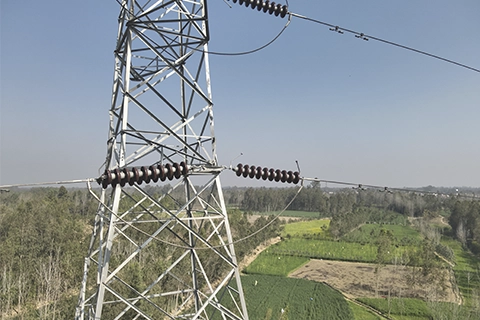
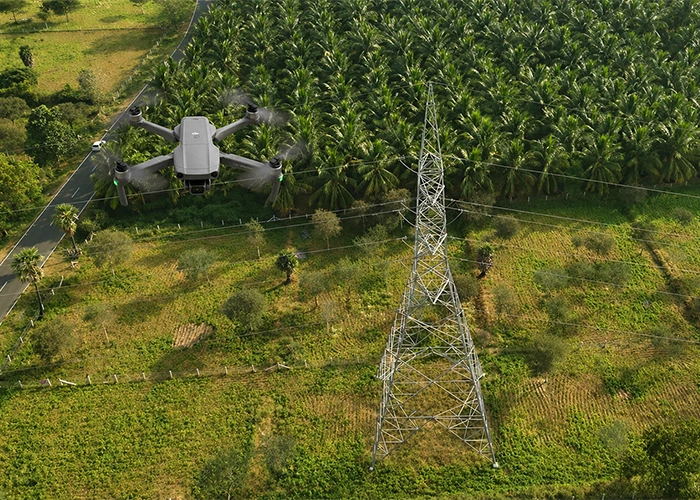
A single Lesoko UAV team covers 8–12 towers per hour, captures thermal and RGB data simultaneously, and delivers a GPS-linked defect report within 48 hours. Enabling predictive maintenance rather than reactive repair.
Applications
What Our Inspection Covers
From structural health to vegetation encroachment, our drone inspection service provides complete corridor intelligence across all fault categories.
Monitoring Infrastructure Integrity
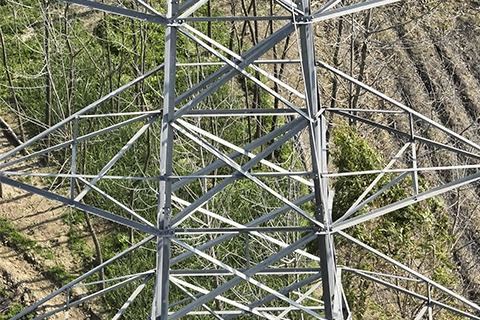
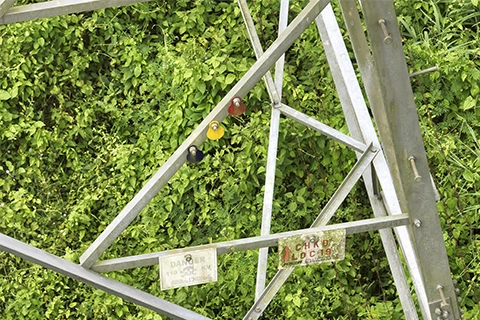
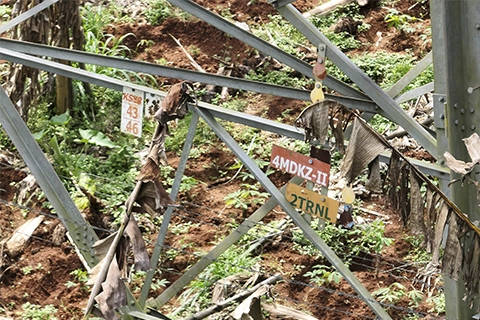
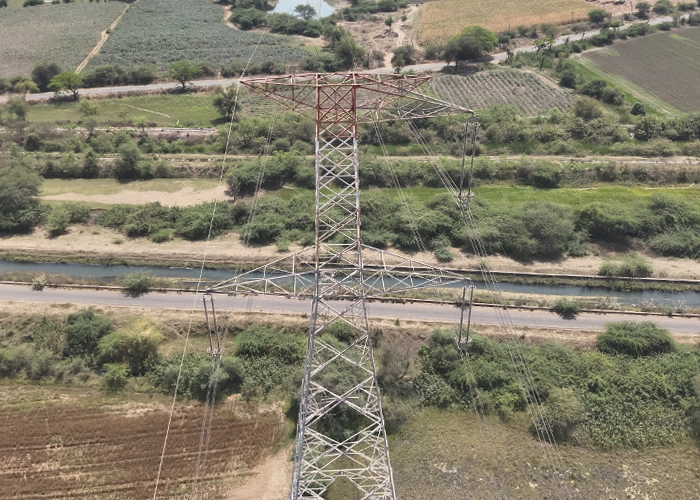
Detects missing nuts, bolts, and hardware, cross arm deformation, tower body corrosion, and paint degradation across every lattice section. Supporting predictive replacement before failure.
Thermal Fault Detection
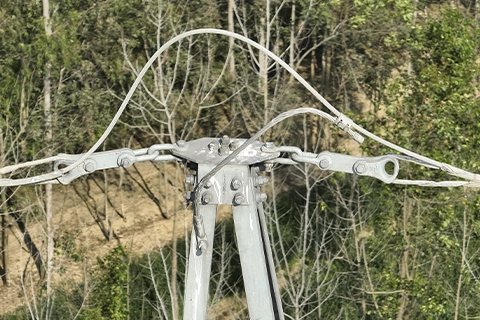
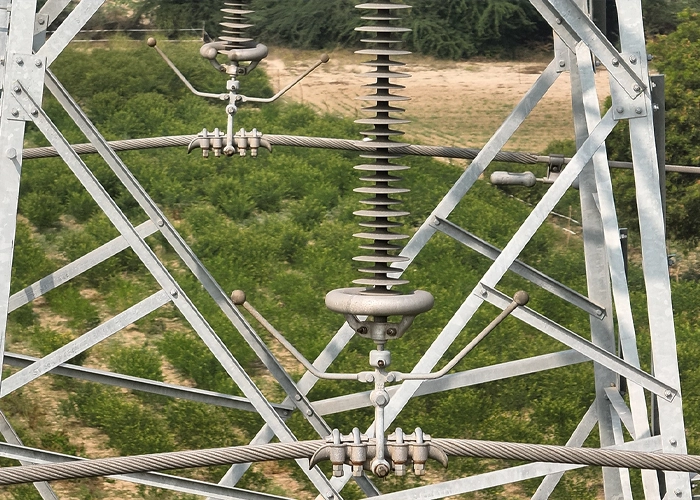
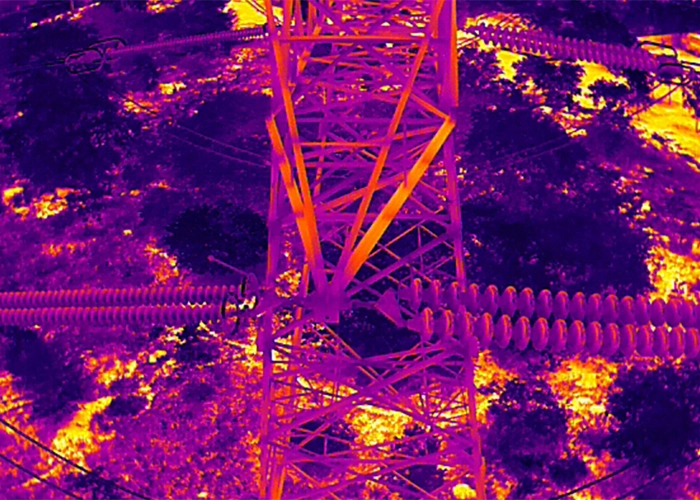
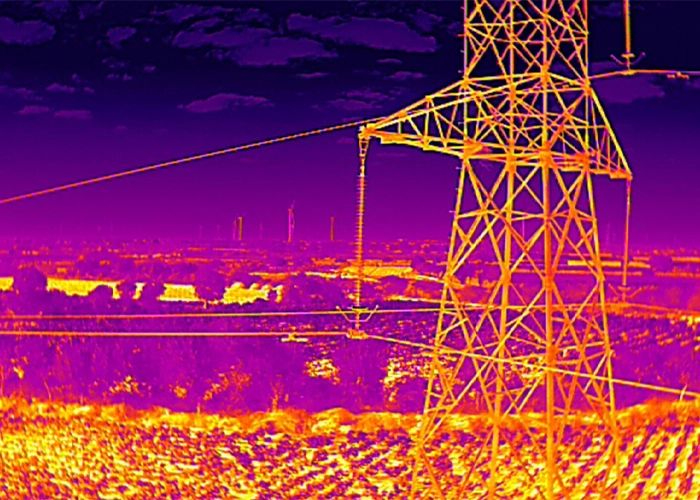
Identifies insulator damage, loose conductor clamps, overloaded components, faulty insulation, hotspots, and arcing horn misalignment using calibrated radiometric thermal cameras detecting faults invisible to RGB inspection.
Corona & Discharge Detection
Detection of corona discharge and partial discharge on insulators and conductor hardware using ultraviolet and thermal sensors. Identifying faults that precede insulation failure and flashover events.
Vegetation Management
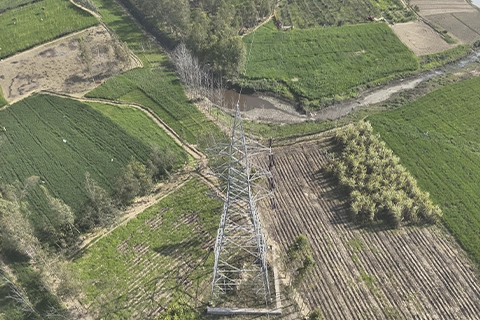
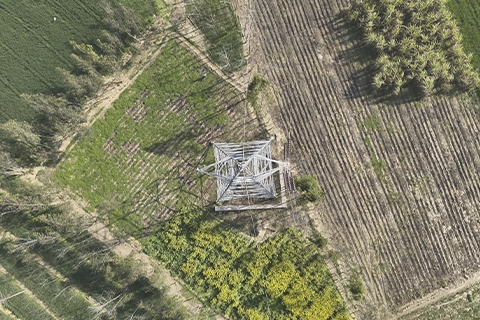
Assesses tree and shrub clearance within the right-of-way corridor, maps encroachment zones, and identifies vegetation posing an outage risk enabling targeted clearance and regulatory compliance reporting.
Manual vs Drone Inspection
Why Drone-Based Transmission Line Inspection Faster, Safer, and 60% More Cost Effective Than Manual Methods
Manual inspection teams cover just 2–4 towers per hour with no thermal imaging, no GPS-tagged defect records, and direct safety exposure near energised infrastructure. Across India’s high-voltage transmission network, undetected faults insulator deformation, loose conductor clamps, arcing horn misalignment accelerate silently until they force a costly outage.
Live Line Inspection
Drone inspection is performed on fully energised transmission lines with zero outage window required. No grid shutdown. No load dispatch coordination. Live 33 KV to 765 KV lines inspected safely with zero worker proximity to conductors.
Component-Level Defect Detection
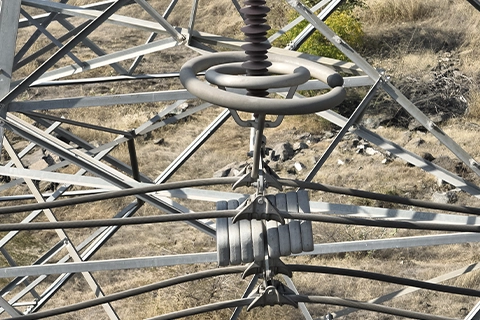
RTK drones fly programmed routes capturing radiometric thermal IR and high-resolution RGB imagery at component level across every tower. Detecting disc insulator damage, strain clamp corrosion, and arcing horn deposition invisible to ground teams and helicopter surveys.
Coverage
We Inspect Every Class of Transmission Line
Whether it’s a 33kV feeder for a wind substation or a 765kV HVDC inter-regional corridor, our drone systems are calibrated and certified for every voltage class in India’s grid.
33 kV
Single & Double Circuit
66 kV
Single & Double Circuit
110 kV
Single Circuit
132 kV
Single Circuit
220 kV
Single Circuit
440 kV
Single & Double Circuit
765 kV
Single & Double Circuit
Process
How Transmission Line Inspection Works
From flight planning to report delivery — a structured four-step process delivering actionable data within 48 hours.
Site Assessment & Flight Planning
Engineers analyse the line route, voltage, terrain, and weather conditions. Automated UAV flight paths are programmed for 100% tower and span coverage. DGCA-compliant for the specific airspace.
Drone Aerial Survey
RTK drones fly pre-programmed routes capturing simultaneous radiometric thermal IR, high-resolution RGB, and where specified LiDAR data. All frames are geo-referenced in real time via RTK GPS.
AI Data Processing & Analysis
Thermal and RGB imagery processed through AI-powered defect classification algorithms automatically categorising fault type, severity, component, and GPS location across every tower inspected.
Defect Report Delivery
GPS-tagged defect report with thermal images, severity maps, and prioritised maintenance recommendations delivered to your team dashboard within 48 hours in PDF, Excel, and GIS formats.
Component Level Inspection
Fault Detection
Defect Types Identified and Severity-Rated
Each defect is classified by type, component, severity, and GPS location giving your O&M team a prioritised maintenance action plan.
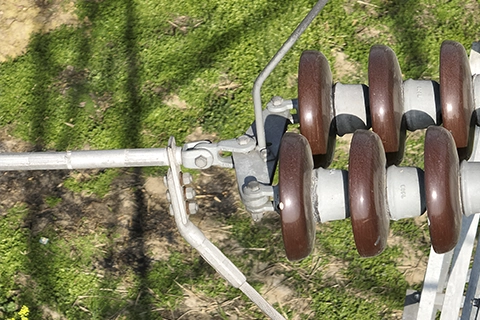
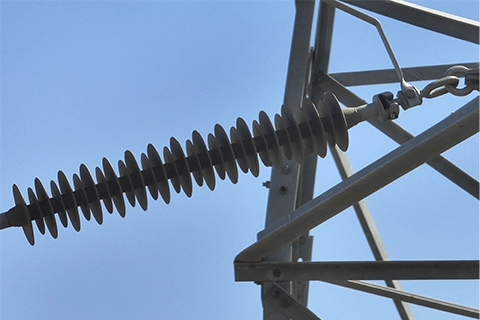
Rubber sheath deformation, glazing damage, and corrosion detected via RGB close-up imaging and thermal analysis. High electrical leakage risk if unaddressed.
🔴 Insulator Deformation & Corrosion
Tower body fastener absence identified through systematic close-range imaging. Directly impacts structural load-bearing capacity of the lattice.
🔴 Missing Nuts, Bolts & Hardware
Overloaded joints, loose connections, and resistive heating identified through calibrated thermal cameras. Average, max and min temperatures reported per component.
🔴 Thermal Hotspots
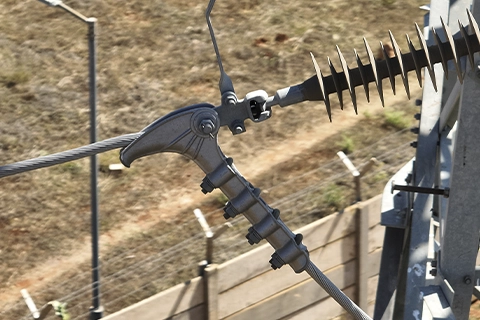
Mechanical disturbance or environmental displacement of arcing horns compromises surge diversion. Deposition accumulation increases flashover risk.
🟡 Arcing Horn Misalignment & Deposition
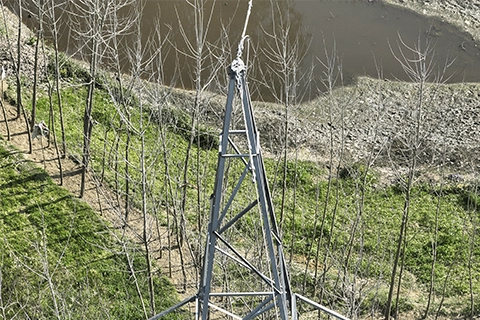
Overgrown bush growth around foundation legs and within ROW corridors detected via aerial and LiDAR survey. Fire hazard, corrosion acceleration, and storm damage risk.
🟡 Vegetation Encroachment
Structural member corrosion, deformation, and paint degradation mapped per tower section. Supports predictive replacement scheduling before failure.
🟡 Cross Arm & Tower Body Damage
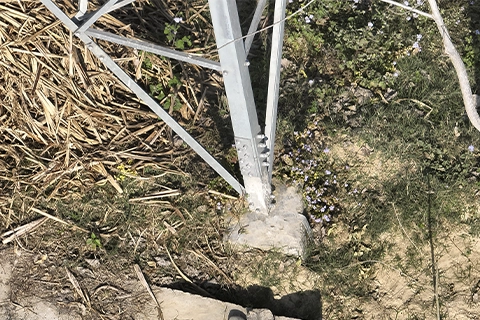
Ground-level imaging of all four foundation legs for concrete spalling, waterlogging, soil erosion, and bolt corrosion often invisible during traditional aerial flybys.
🟢 Foundation Leg Condition
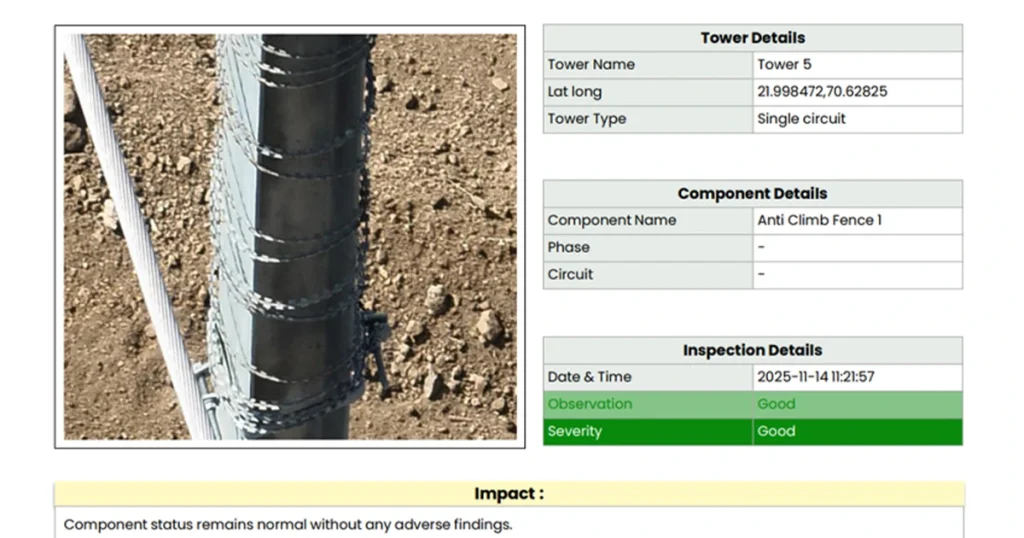
Earth wire continuity, anti-climb fence condition, danger signs, and name board legibility. All documented for regulatory compliance records.
🟢 Earthing Wire & Name Board
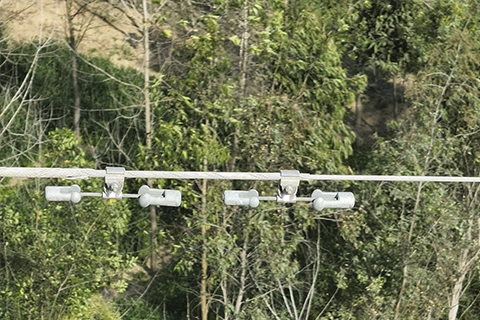
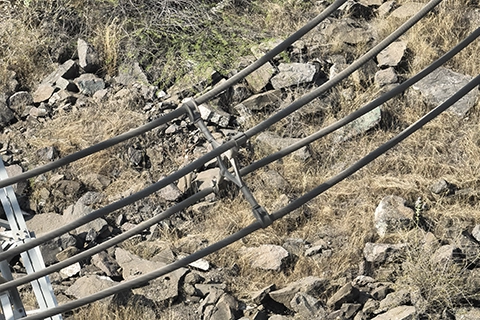
Missing, displaced, or damaged Stockbridge dampers and bundle spacers identified before aeolian vibration causes conductor fatigue.
🟢 Vibration Damper & Spacer Status
Sensor Technology
Multi-Sensor Drone Platform
Each flight deploys calibrated sensor payloads matched to the fault types and line voltage being surveyed.
Thermal Infrared (Radiometric IR) Camera
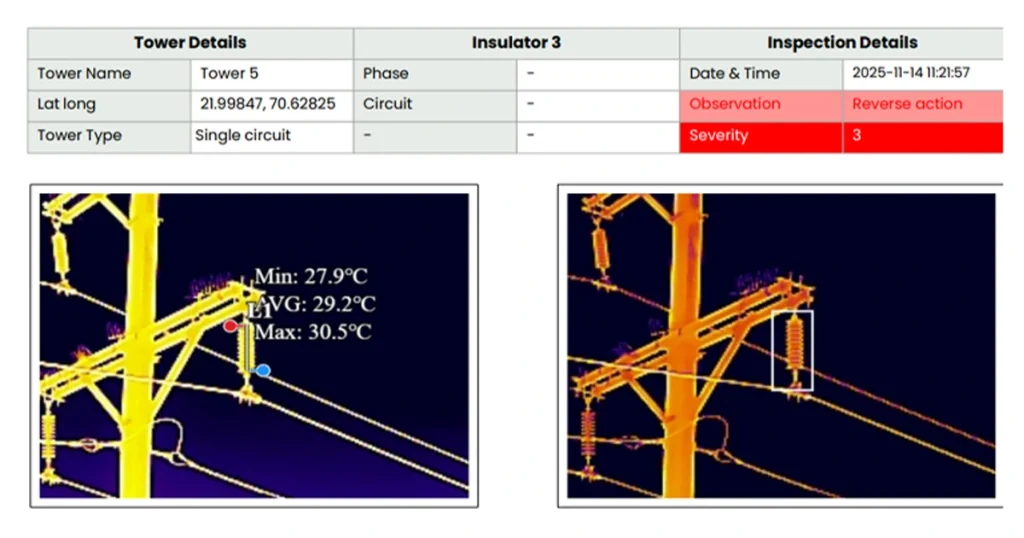
Calibrated radiometric thermal cameras capture absolute temperature values not relative heat differences enabling precise fault classification and severity scoring for every insulator, clamp, and joint.
- 0.05°C thermal sensitivity for early fault detection
- Radiometric TIFF output with embedded temperature data
- Detects hotspots invisible to RGB cameras
- Precise temperature measurement with min / avg / max reporting
High-Resolution RGB Camera
Simultaneous RGB capture at component-level resolution provides visual confirmation of physical damage. Cracks, deformation, missing hardware, and structural wear complementing thermal data in the defect report.
- Component-level crack and deformation visibility
- Correlated with thermal data per component
- Full orthoimage of tower and corridor
- Evidence images for maintenance work orders
RTK GPS Drone Platform
Real-Time Kinematic GPS-equipped drones fly pre-programmed automated routes with centimetre-level positioning accuracy ensuring 100% coverage, consistent altitude, and DGCA-compliant operations across any terrain.
- ±2cm absolute GPS positioning accuracy
- Automated waypoint flight — no manual piloting variance
- 100% tower and span coverage guaranteed
- DGCA regulatory compliance built in
LiDAR Sensor (Light Detection and Ranging)
LiDAR provides high-resolution 3D point cloud models of the entire transmission corridor capturing terrain, vegetation, infrastructure, and conductor positions with geospatial centimetre-level accuracy.
- Phase-to-phase and phase-to-ground clearance measurement
- Conductor sag and galloping analysis
- Vegetation encroachment mapping within RoW
- GIS-ready output for asset management integration
Drone-Based Transmission Line Inspection in Action. See How We Detect Faults Across HV & EHV Lines
Three Reasons Utilities Choose UAV Inspection
Drone-based inspection outperforms every conventional method on speed, safety, and data quality — simultaneously.
Measurable Impact.
A 132KV single-circuit transmission corridor at Jhankarpali, Odisha was inspected across 5 tension towers. The inspection surfaced 19 defects across multiple component types — with vegetation encroachment dominating across foundation legs and critical structural hardware faults on Tower 5, including insulator deformation, missing nut/bolt, and arcing horn deposition. All defects were GPS-tagged with thermal and RGB image evidence per component.
Outcomes Achieved
Defect Breakdown — All 5 Towers
Tower Health Summary
A 33KV double-circuit transmission line at Mogarale, Maharashtra was inspected across 13 feeders over two days. The corridor carried significant thermographic anomalies — insulator temperatures across feeders ranged from 18.7°C to 40.6°C. A total of 154 insulator defects were identified, with a flashover event (FL) flagged on the VEL_F1 feeder requiring emergency corrective action. Per-insulator thermographic temperature data was delivered for all feeder strings.
Outcomes Achieved
Defect Breakdown — 154 Total Defects
Thermographic Temperature Range
Tower Health Summary
A 132KV mixed single and double-circuit corridor at Tusura-1, Odisha was inspected across 34 tension towers over four days. The inspection uncovered 95 defects — the largest single-corridor defect count in this series. Arcing horn deposition (38) and foundation leg vegetation (42) dominated, with additional hotspot insulators, jumper deformation, and missing components spread across multiple towers.
Outcomes Achieved
Defect Breakdown — 95 Total Defects
Tower Health Summary
Inspection Deliverables
Tower Defect Report (PDF)
Component-level defect sheets with GPS coordinates, photographs, thermal images, severity ratings, impact assessment, and specific recommendations per tower.
Summary Excel Report
Cumulative tower-wise summary with defect count per component, overall tower status (Good / Attention / Defective), and sortable data for maintenance planning.
GPS Asset Map (GIS)
Precise tower location data integrated with GIS for network-wide visualisation. Colour-coded markers by severity. Exportable for existing asset management systems.
Live Dashboard Access
Real-time project dashboard with interactive map, component status navigation, thermal image viewer, and downloadable reports.
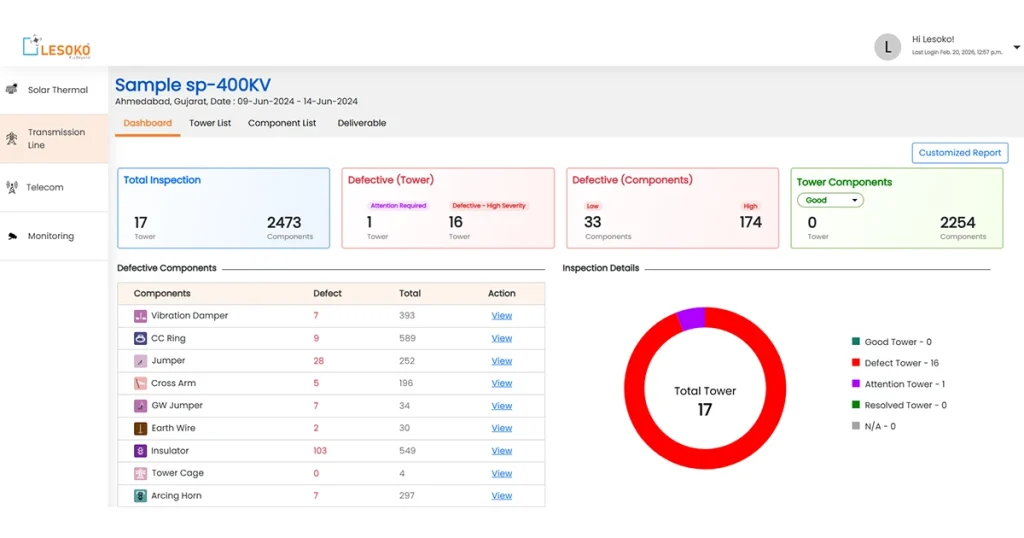
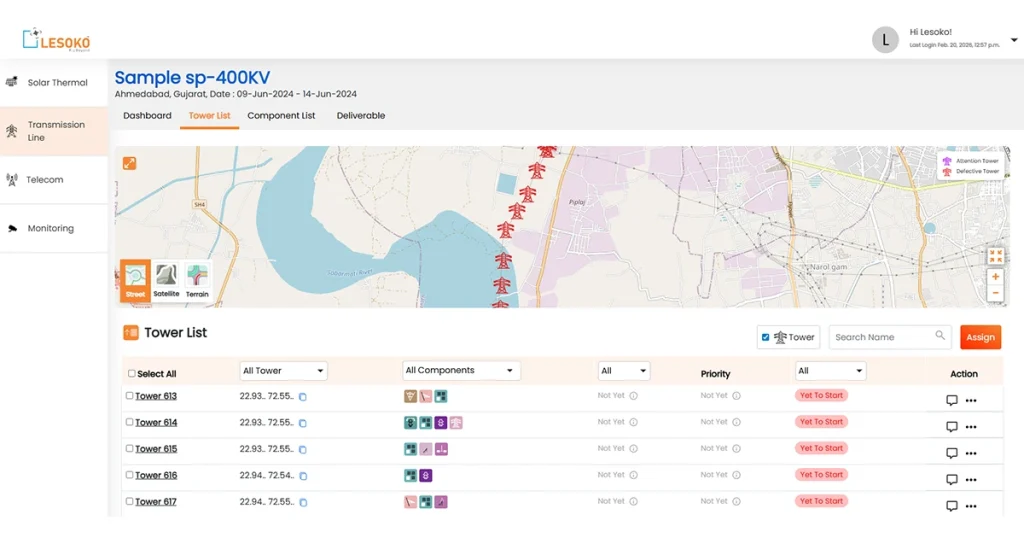
Our cloud-based inspection management platform gives you real-time visibility across all ongoing and completed projects with GPS-accurate tower placement, colour-coded defect indicators, and component-level drill-down in a single interface.
Integrated Map View
Real-time interactive map overlay with precise GPS coordinates of every inspected tower and span.
Colour-Coded Defect Indicators
Green (Good), Amber (Attention Required), Red (Defective) instant visual severity assessment across the entire network.
Component Status Navigation
Drill down from project → tower → individual component with photo evidence, thermal data, and recommendations.
Thermal Image Viewer
Precise temperature readings (Avg / Max / Min) per component with expected range comparison and hotspot identification.
Ready to Inspect Your Transmission Line?
Phone/ Whatsapp
+91 78457 26375/ 7845726374
Email Us
sales@lesoko.in
Head Office
Get Your Inspection Quote
Frequently Asked Questions
Transmission line inspection is the systematic examination of high-voltage power infrastructure including towers, conductors, insulators, and associated hardware to detect defects, structural degradation, and vegetation encroachment before they cause unplanned outages. In India, regular inspection is critical for grid reliability and compliance with CEA and PGCIL maintenance standards. Drone-based inspection allows this to be done faster, safer, and at higher data quality than any manual method.
Modern transmission line inspection in India uses three primary drone-based methods: RGB visual inspection for structural defects, thermal infrared (IR) imaging for hotspot and insulator fault detection, and LiDAR survey for precise 3D mapping, clearance measurement, and vegetation encroachment analysis. These are often deployed simultaneously in a single flight to maximise data capture per corridor kilometre.
Yes. DGCA-certified drone operators can legally conduct transmission line inspections across India. Drone-based inspection is faster, safer, and more accurate than manual methods covering up to 10× more line length per day with zero exposure to live-line hazards for ground personnel. All our operations are fully DGCA-compliant, with required permits and approvals managed for each project.
Drone inspection detects insulator damage and deformation, conductor sagging and clearance violations, missing or loose nuts and bolts, corrosion on tower body and cross arms, arcing horn misalignment and deposition, vibration damper displacement, earthing wire damage, GW jumper faults, thermal hotspots on clamps and joints, and vegetation encroachment within the right-of-way corridor.
CEA and PGCIL guidelines recommend detailed inspection of transmission lines at least once per year for EHV (220KV and above) lines, and at minimum every two years for sub-transmission (33KV–132KV) lines. Lines passing through high-risk terrain, densely vegetated corridors, or coastal areas may require more frequent surveys. Post-storm emergency inspections are also recommended for lines in cyclone-prone regions.