
Drone Night Surveillance Services Across India
5 Lakh+
Drone Flights Completed
Advanced
Night Surveillance
50+ Lak
Worth Saved
Real time
Evidence
99%
Detection Accuracy
Your Site Doesn't Stop When the Sun Goes Down
Solar and infrastructure sites in India from Tamil Nadu’s utility corridors to Rajasthan’s desert parks face their highest security risk after sundown. Cable theft, equipment intrusion, and perimeter breaches peak between midnight and 4 AM, precisely when conventional security collapses.
A 200-acre solar farm may need 60+ CCTV cameras for basic coverage, and even then, darkness, dust, and distance make them unreliable. Security guards cannot patrol hundreds of acres on foot. Fixed cameras have blind spots that experienced intruders know well.
One night of undetected cable theft can cost ₹10–50 lakhs. A year of professional drone surveillance from Lesoko typically costs less.
Problem Bullet List:
- CCTV covers only fence lines interior approach goes undetected until morning
- Security guards cannot patrol 100–2,000 acre sites at night with meaningful coverage
- Wild animals and intruders go undetected until they have already caused damage
- No GPS-tagged photographic evidence for insurance claims or FIR registration
- Guard non-compliance guards sleeping or abandoning posts goes unmonitored
- Solar panel theft in Rajasthan and Gujarat is increasingly organised and systematic
What Is Drone Night Surveillance?
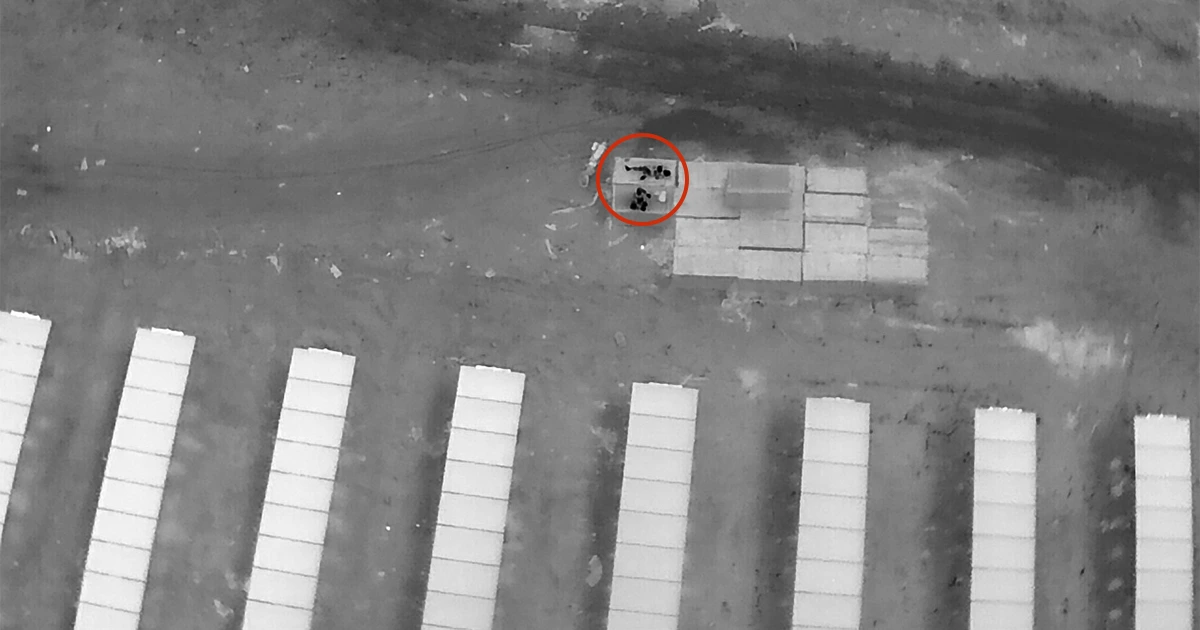
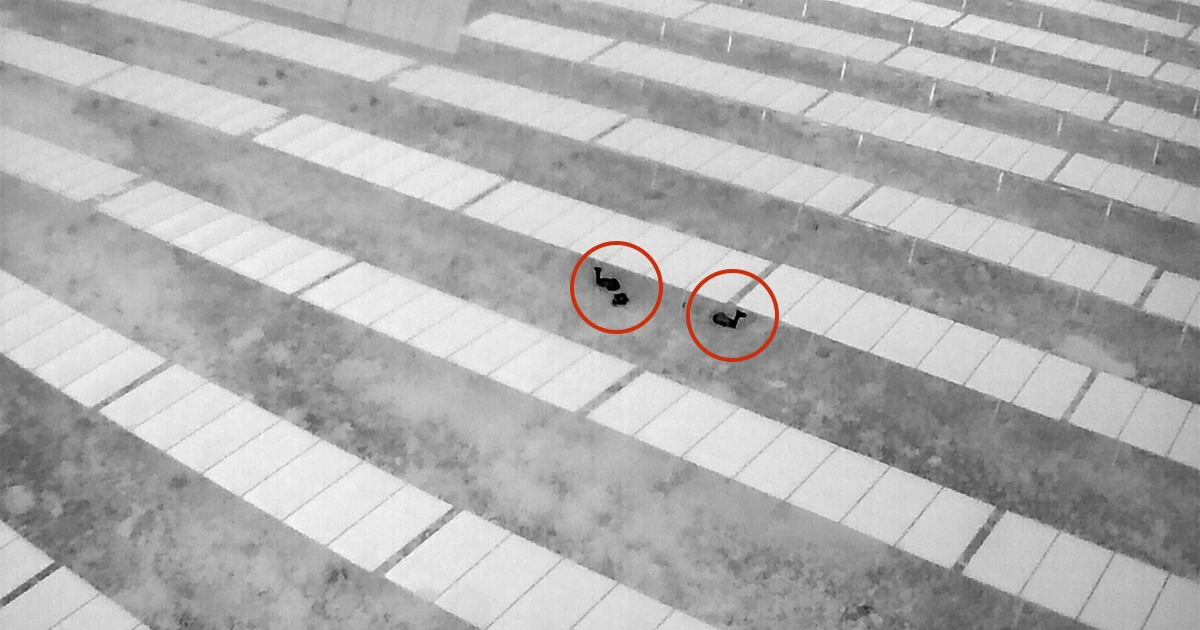
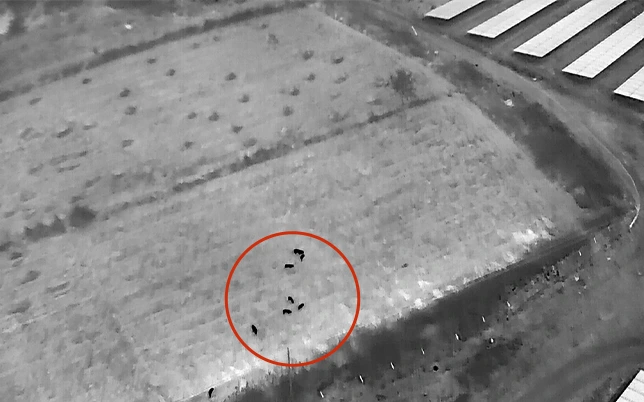
Drone night surveillance is the deployment of DGCA-approved UAVs equipped with thermal infrared cameras and RGB sensors on scheduled flight paths across a site perimeter after dark. The thermal camera detects heat signatures from humans, animals, vehicles, and electrical anomalies in complete darkness, transmitting a live feed to the security room in real time.
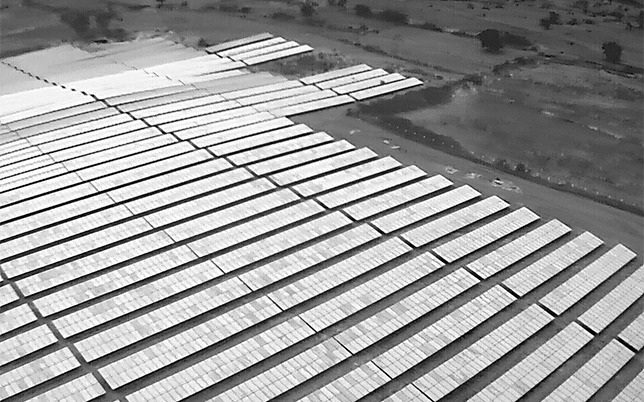
Unlike CCTV, which depends on fixed installation points and visible light, a drone provides full aerial coverage of any terrain including interior panel rows, cable trenches, inverter stations, and perimeter fencing from a single airborne platform. A single drone can patrol the equivalent of 200+ CCTV camera zones in a single sortie.
- Thermal IR Camera
- RGB Camera
- Live Streaming
- Heat Signature Detection
- Boundary Breach
- AI-Assisted Anomaly Flagging
- Client Server Storage
- Daily PDF Reports
How Lesoko Night Surveillance Works
From Mobilisation to Morning Report
Site Assessment & Risk Mapping
Lesoko's pilots visit the site, map the perimeter, identify high-risk zones (cable trenches, panel rows, inverter stations), and evaluate existing security gaps. Block-wise coverage patches are defined based on site geometry, vegetation, and priority areas. DGCA airspace restrictions for the specific location are verified at this stage.
Live Thermal Monitoring
Live thermal footage streams from the drone to the ground control station and simultaneously to the client's on-site security room. The pilot monitors the feed continuously during each sortie, identifying heat anomalies in real time. Night operations typically run from 20:00 to 08:10 the following morning Covering all high-risk hours without meaningful gaps.
Flight Path Programming & Schedule Design
Flight routes are designed for both automated block-coverage and manual patrol sequences. Critically, the flight schedule and path rotate daily. A deliberate protocol to prevent pattern recognition by repeat intruders. A fixed patrol pattern is the single biggest security vulnerability in drone operations; Lesoko eliminates it by design.
Incident Detection & Immediate Response
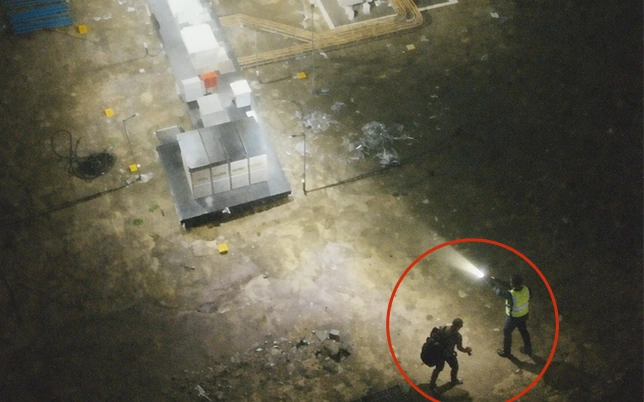
When the thermal feed flags an anomaly a human heat signature approaching a cable trench, a vehicle entering the perimeter, a wild animal near inverter equipment, or an electrical heat spike. The pilot alerts the security team immediately via the designated protocol (WhatsApp group, security room terminal, or push notification). Every alert includes a GPS-tagged thermal capture and timestamp.
DGCA-Compliant Deployment
A certified Lesoko Remote Pilot Certificate holder deploys to site with a minimum of two drones per operational block. DGCA Digital Sky airspace permissions are obtained for each block before the first flight. During daylight hours, RGB cameras are the primary sensor. After sunset, thermal IR takes over as the primary detection instrument.
Structured Daily Reports & Data Storage
All video footage and imagery are stored directly on the client's own server not Lesoko's infrastructure or any third-party cloud. A PDF incident summary is generated each morning covering flight logs, boundary check confirmations, anomaly alerts, security personnel compliance observations, and incident evidence. Weekly and monthly consolidated reports are uploaded to the client's shared dashboard.
What Lesoko Night Surveillance Detects
Real threat types detected by Lesoko’s night surveillance teams across solar farms, construction sites, and industrial facilities across India.
Organised groups target DC cables, string combiner boxes, and earthing cables at solar farms — typically arriving after midnight in low-visibility conditions. Thermal cameras detect human heat signatures approaching cable trenches in complete darkness.
Immediate alert to site security enables interception before cables are removed. Timestamped thermal footage provides FIR-ready evidence with intruder identification.
Construction sites and solar farms face regular boundary intrusions — trespassers, competitors conducting reconnaissance, and organised criminal groups assessing the site for future theft. Fixed CCTV covers only fence lines, missing interior approach.
Drone patrol over the full perimeter and interior detects any human presence using thermal imaging — flagging intrusion before the person reaches sensitive equipment or cable routes.
Solar farms in Karnataka, Rajasthan, and Andhra Pradesh are frequently visited by wildlife after dark — leopards, wild boars, monitor lizards, and venomous snakes near inverter stations and panel rows. Wildlife can damage electrical infrastructure and create serious safety risks for maintenance staff entering the site at dawn.
Thermal cameras detect animal heat signatures at a distance — alerting project sponsors before any physical contact with equipment or personnel occurs.
Thermal cameras detect heat anomalies consistent with fire or smouldering vegetation inside or outside the project boundary — including fires approaching from agricultural fields adjacent to solar parks.
Early detection in the wee hours allows firefighting response before the fire reaches panel rows or electrical infrastructure — preventing equipment loss that CCTV and manual patrols would catch too late.
Drone Night Surveillance Across Every State in India
Lesoko deploys DGCA-certified drone surveillance teams to all major solar and industrial corridors across India with pilots trained on local airspace regulations, site conditions, and region-specific security threat profiles.
Pan-India deployment
From utility-scale solar parks in Rajasthan and Gujarat to construction sites in Tamil Nadu, Karnataka, Andhra Pradesh, Maharashtra, and Telangana. Our certified teams are on the ground across India. We also operate in Uttar Pradesh, Punjab, Haryana, West Bengal, Odisha, and the Northeast, with DGCA permissions managed for each corridor.
In-house certified pilots
Every Lesoko night surveillance mission is operated by our own DGCA-certified Remote Pilots not contracted out to local vendors. This means identical operational standards, reporting quality, and data security protocols whether your site is in Chennai or Kutch, Bikaner or Bhubaneswar.
Region-specific threat intelligence, built into every deployment
India's solar security threats are not uniform. Desert corridors in Rajasthan and Gujarat face organised cable theft gangs approaching from multiple directions across flat terrain. Forest-adjacent parks in AP and Karnataka face leopard and wild boar intrusion near inverter stations. Harvest-season fire risk from adjacent agricultural fields is critical in Maharashtra and MP. Northeast deployments require pilots with specific local airspace regulatory knowledge. Lesoko builds these regional threat profiles into every site plan.
Drone Night Surveillance Across Every State in India
Lesoko deploys certified drone surveillance teams to all major solar and industrial corridors across India. From utility-scale parks in Rajasthan to construction projects in Tamil Nadu, our pilots are experienced with local airspace regulations, site conditions, and security threat profiles specific to each region.
Rajasthan & Gujarat
India’s largest solar corridors face extreme cable theft risk due to remote locations, high-value copper DC cable runs, and sparse local law enforcement response. Desert terrain with minimal vegetation means intruders can approach cable trenches undetected from multiple directions. Thermal drone surveillance is the only scalable solution for 500–2,000 acre utility-scale parks. Lesoko has active deployments across the Jodhpur, Bikaner, Kutch, and Morbi solar clusters.
Tamil Nadu & Karnataka
Rapidly growing commercial and industrial solar portfolios in Tamil Nadu and Karnataka face post-monsoon security lapses particularly during commissioning and handover phases when site rosters are in transition. Urban-proximate solar installations face higher trespassing frequency. Lesoko is headquartered in Chennai with the fastest mobilisation times for Tamil Nadu deployments.
Andhra Pradesh & Telangana
Large-scale solar parks in Andhra Pradesh and Telangana experience regular wildlife intrusion leopards and wild boars near inverter stations are a documented operational risk, particularly in Kurnool, Anantapur, and Nalgonda districts. Thermal detection capability that conventional CCTV cannot replicate is essential for safe dawn site entry by maintenance teams.
Maharashtra & Madhya Pradesh
Wind and solar hybrid projects in Maharashtra and MP present combined surveillance requirements ground-level panel security and elevated turbine perimeter monitoring. Lesoko’s multi-asset capability covers both in a unified operation. Fire risk from adjacent agriculture during rabi and kharif harvest seasons requires thermal early warning capability.
West Bengal & Northeast India
Remote transmission infrastructure and mining sites in Northeast India face access and airspace challenges that require pilots with specific local regulatory knowledge. Lesoko has operational experience in northeast deployments with DGCA permissions managed for each project corridor.
What You Receive
Surveillance Deliverables
Every deliverable is stored on your own server and uploaded to a shared client dashboard accessible by your O&M team, security manager, and senior leadership simultaneously.
Live Feed
- Real-time thermal IR stream
- Real-time RGB stream
- Pilot monitoring per sortie
- Transmitted to security room
- Incident flagging mid-flight
Hourly Updates
- Site status photos
- Boundary check confirmation
- Guard compliance monitoring
- Animal / intruder flags
- GPS-tagged anomaly captures
Data Storage
- All video on client server
- All images on client server
- No third-party cloud
- Permanent evidence trail
- Accessible for audits
PDF Reports
- Daily incident summary
- Weekly patrol report
- Monthly consolidated review
- Flight log with timestamps
- Dashboard group upload
Why Lesoko
What Separates Us from a Generic Drone Vendor
DGCA-Compliant Operations
Every Lesoko pilot holds a valid Remote Pilot Certificate. All drones are registered under India's Digital Sky platform. DGCA airspace permissions are obtained for each operational block. You carry zero regulatory liability on any Lesoko mission.
Client Server Data Storage
All surveillance footage and reports are stored directly on the client's server not on Lesoko's infrastructure or third-party cloud. You own complete control of your data from day one.
PAN-India Deployment
With operational deployments across Tamil Nadu, Gujarat, Maharashtra, Rajasthan, West Bengal, and the Northeast, Lesoko can mobilise to virtually any location in India with local airspace and regulatory familiarity already in place.
Trusted By Industry leaders












How Lesoko Detects Cable Theft at Night Thermal Drone Surveillance | Solar Farm India
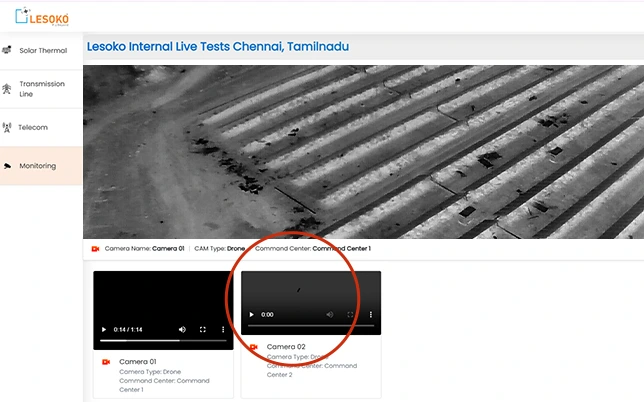
Lesoko Night Surveillance Dashboard
Every night surveillance deployment includes access to Lesoko’s secure client dashboard where your O&M manager, security team, and senior leadership can monitor live site status, review incident alerts, and access all surveillance reports from anywhere, at any time.
Dashboard Features
- Secure role-based access and login
- Live thermal and RGB feed status per operational block
- GPS-tagged incident alerts with timestamp and thermal capture image
- Anomaly log intruder, wildlife, vehicle, and electrical heat signatures
- Guard compliance monitoring records
- Daily incident summary PDF auto-uploaded each morning
- Weekly patrol reports and monthly consolidated reviews
- Downloadable reports in PDF, Excel, and image formats
- No third-party cloud dependency. All data stored on your own server
Request Free Surveillance Quote
Phone/ Whatsapp
+91 78457 26375/ 7845726374
Email Us
sales@lesoko.in
Head Office
Request Free Surveillance Quote
Frequently Asked Questions — Drone Night Surveillance India
Yes. Drone surveillance operations are fully legal in India when conducted under the Drone Rules 2021, with DGCA-registered aircraft operated by licensed Remote Pilot Certificate holders. Industrial surveillance including night operations for solar farms, construction sites, and industrial facilities is an explicitly permitted use category. Lesoko manages all airspace permissions for each operational block, so no regulatory burden falls on the client.
Night surveillance relies on thermal infrared cameras, not visible light. Thermal cameras detect heat emissions from humans (body temperature ~36–37°C), vehicles (engine and exhaust heat), animals, and electrical hot spots. They function identically in complete darkness, fog, and heavy dust conditions that make standard CCTV and even night-vision cameras unreliable. The thermal feed is transmitted live to the security room throughout each sortie.
Yes, through a staggered two-drone rotation per operational block. Each drone flies a 25–30 minute sortie; battery swap takes under 5 minutes. Two drones per block are scheduled so their downtime windows do not overlap. Lesoko’s documented schedule covers 48+ sorties per day across two drones from 20:00 to 08:10 the following morning with no meaningful gaps in coverage.
For a 200-acre solar farm with 24×7 coverage including thermal night operations, a dedicated pilot team, live feed, and full daily reporting, indicative monthly pricing ranges from ₹2.5–4.5 lakhs depending on site location, remoteness, and reporting scope. This is typically 30–50% less than equivalent ground security manpower for comparable coverage while delivering significantly higher detection accuracy and documentation quality.
Lesoko’s certified pilot monitors the live thermal feed from a ground control station on-site throughout each sortie and coordinates with the client’s security team via a pre-agreed protocol typically a dedicated WhatsApp group, security room terminal, or push notification system. Incident alerts include GPS location, thermal capture image, and timestamp. The pilot and security team respond together under a defined incident escalation procedure.
All video footage, images, and data are stored directly on the client’s own server. Lesoko stores nothing on its own infrastructure or any third-party cloud platform without explicit client consent. The client owns 100% of all data from the first flight. Lesoko uploads daily PDF reports to the client’s shared dashboard and retains no copies of raw footage beyond the engagement.
For most sites, drone surveillance is most effective as a force multiplier for a leaner ground team not a complete replacement. Drones detect and document; guards physically respond and intervene. The combination typically allows clients to reduce guard headcount by 50–70% while dramatically improving detection capability and evidence quality. For fully unmanned remote sites during non-operational hours, drone-only coverage is a viable configuration.
For sites in Tamil Nadu, Maharashtra, Gujarat, and Rajasthan where Lesoko has established operational presence, deployment from contract signing to first flight takes 5–10 working days covering site assessment, flight planning, DGCA airspace permissions, and equipment mobilisation. For sites in other states or remote geographies, timelines of 2–3 weeks are typical. Lesoko provides a specific mobilisation timeline after an initial site brief.
Drone night surveillance pricing in India depends on site area, duration of engagement, number of pilots required for 24×7 coverage, and specific deliverables required. Lesoko offers project-based pricing for short-term security deployments during construction and contract-based pricing for ongoing O&M surveillance. Pricing is significantly more cost-effective than deploying the equivalent number of security guards and CCTV infrastructure for the same coverage area. Contact Lesoko at +91 78457 26375 or sales@lesoko.in for a customised quote based on your specific site and security requirements.
Lesoko’s thermal infrared cameras can reliably detect human heat signatures at distances up to 400 metres in complete darkness. Vehicle detection range extends to 600+ metres due to higher thermal mass. Detection accuracy depends on ambient temperature differential in cooler conditions (night, winter months), human and animal signatures stand out more clearly against background. In summer nights in Rajasthan and Gujarat, ambient temperature differential is lower, which is factored into flight altitude and sensor settings during deployment.