Drone Solar Ground Mount Survey India Sub-cm Topographic Data
2.3+ lakh
Hectares Surveyed
5 Lakh+
Safe Drone Flights
34+ GW
Solar Asset Inspected
210+ Cr
Saved in Operational Costs
<1cm
Survey Accuracy (RTK GPS + GCPs)
What Is Drone Solar Ground Mount Survey?
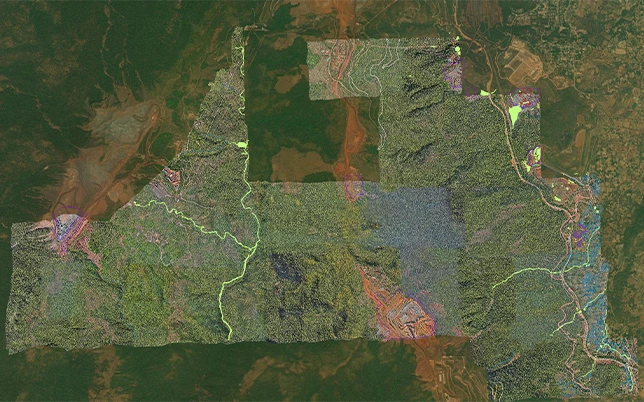
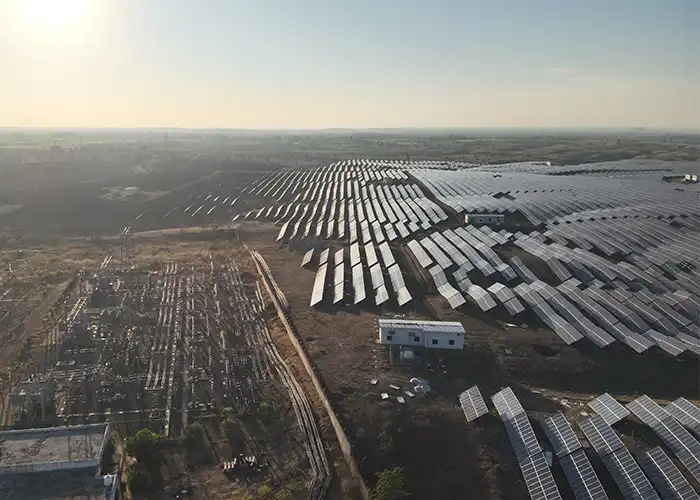
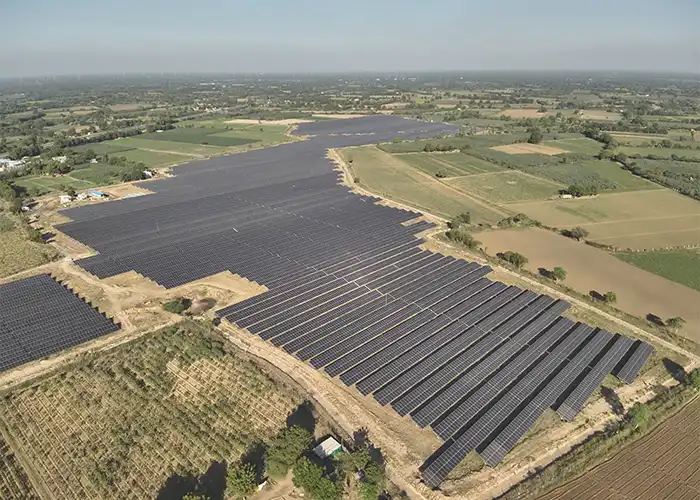
Drone solar ground mount survey is aerial topographic mapping of large solar project sites using photogrammetric data acquisition. Licensed operators fly systematic grid patterns, capturing georeferenced imagery processed via SfM algorithms into orthomosaic maps, digital elevation models, topolayout maps, contour data, vegetation index, slope analysis, and spot levels delivering GIS/CAD-ready outputs in a single survey operation. The full process constitutes aerial spatial data acquisition. Replacing multiple conventional survey methodologies with a single flight-to-report workflow.
The workflow follows a defined sequence: drone captures high-resolution georeferenced imagery at calibrated flight altitude → SfM photogrammetric processing reconstructs full terrain → eight data layers output simultaneously. Ground Control Points (GCPs) verified with RTK GPS anchor every layer to sub-centimetre spatial accuracy.
Conventional Total Station and DGPS surveys operate at a fixed grid, take weeks to complete on large sites, and produce only spot levels and basic contour data. They cannot access dense vegetation or uneven terrain. Aerial photogrammetry covers the same area 60× faster and delivers data richness no ground-based method can match.
The Problem
Why Conventional Site Surveys Create Project Risk
Incorrect terrain data causes panel placement errors, drainage failures, and structural design rework that surface during construction not during design. An inaccurate contour map at feasibility stage can force costly redesigns after project financing is locked.
For sites above 100 acres, Total Station and DGPS surveys introduce multi-week timeline bottlenecks in EPC schedules. The fixed-grid approach also means survey data gaps in areas teams cannot physically access. A growing problem on sites with thorn vegetation, uneven gradients, and waterlogged boundary zones.
Manual surveys produce only spot levels and basic contour data. They do not generate orthomosaic imagery, vegetation index, slope analysis, or GIS-ready spatial formats. Without these layers, PVsyst energy simulation, shadow analysis, civil cost estimation, and layout design all operate on incomplete information.
Process
How Aerial Photogrammetric Survey Works
From pre-flight planning to final deliverables. Every survey follows a structured, DGCA-compliant workflow.
Mission Planning
Site boundary definition, systematic flight path design, and GCP placement plan calibrated to terrain complexity and required accuracy level.
GCP Deployment
Physical Ground Control Point markers placed across the site. Density determined by terrain type. On sites with thorn vegetation or steep slopes, GCP placement requires additional field time, which is scoped during pre-survey review and reflected in the project timeline before mobilisation.
Regulatory Clearance
DGCA flight permissions verified, NOTAM coordination completed, no-fly zone checks conducted, and site safety assessment signed off before mobilisation.
Flight Execution
A licensed drone operator flies systematic image capture with a high-resolution RGB camera and RTK GPS module. Calibrated overlap at defined flight altitude ensures the point cloud density required for sub-centimetre accuracy.
Photogrammetric Processing
SfM algorithms generate a dense point cloud, which is used to produce the orthomosaic, DEM, and DSM simultaneously. Full terrain reconstruction with GCP-anchored accuracy validation and checkpoint residual reporting.
Deliverable Generation
Complete 8-layer output are orthomosaic, topolayout, DEM/DTM, contour map, vegetation index, slope analysis, spot level grid, and comprehensive report.
Deliverables
What You Get from Every Ground Mount Solar Survey.
Every ground mount solar site survey delivers eight data layers in a single operation:
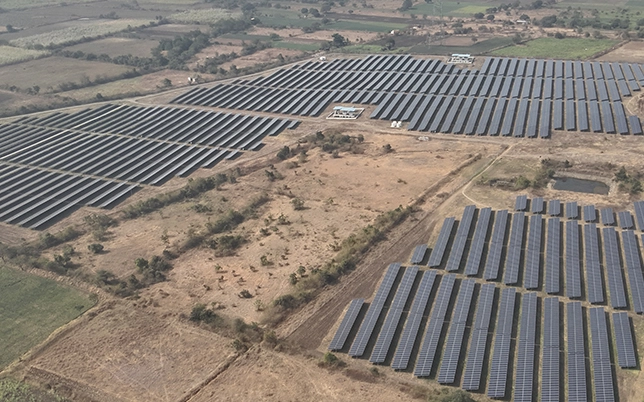
Georeferenced Orthomap
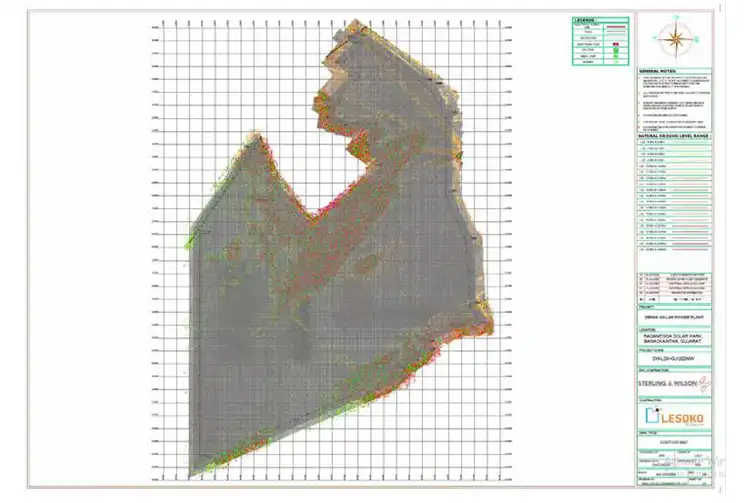
Topolayout Map
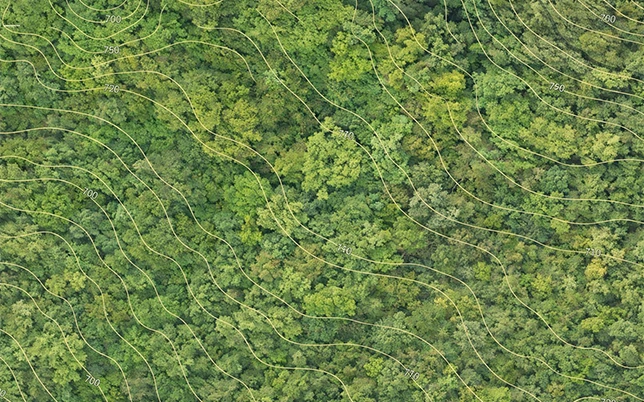
Contour Map with Spot Levels
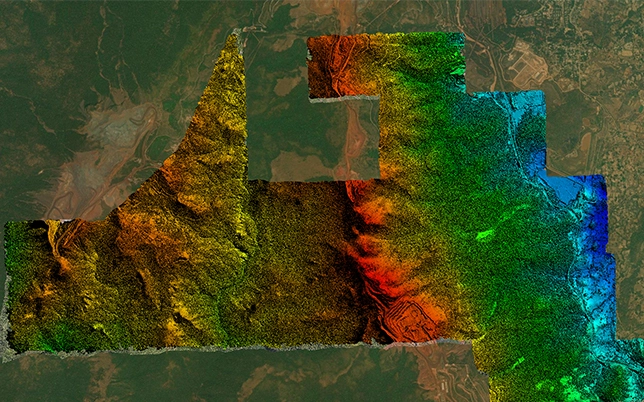
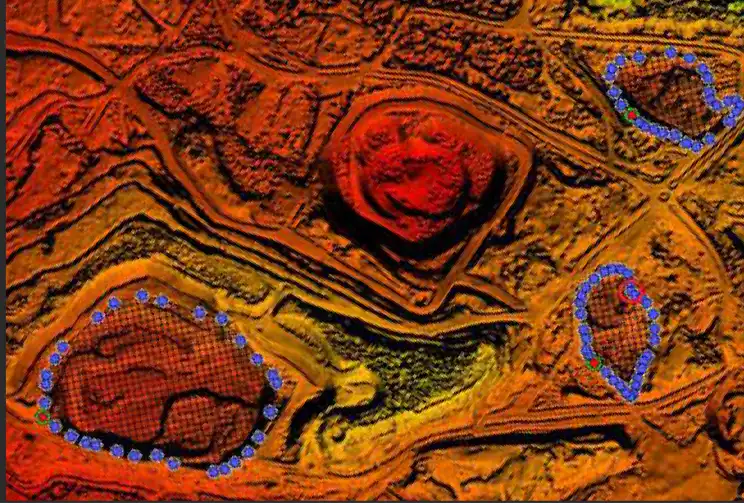
Digital Elevation Model (DEM / DTM)
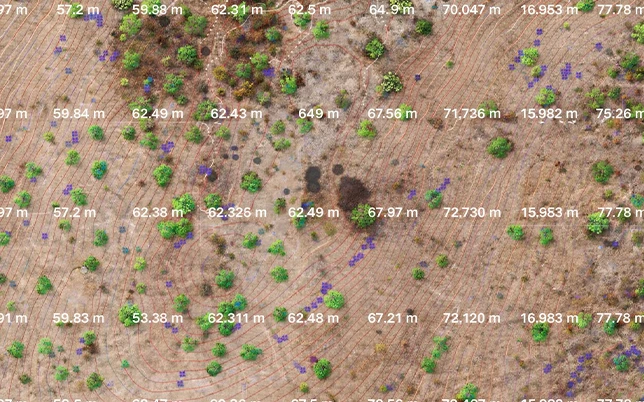
Vegetation Index & Tree Count
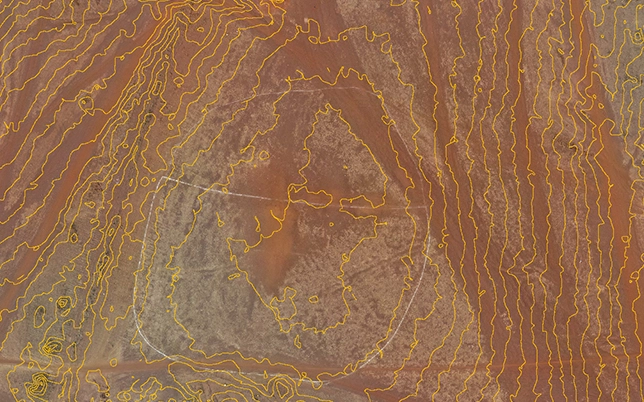
Contour Map
Slope Percentage Map
Handheld Camera Site Images
Operational Value
What You Get With Aerial Photogrammetric Survey
- <1cm survey accuracy with RTK GPS and verified Ground Control Points
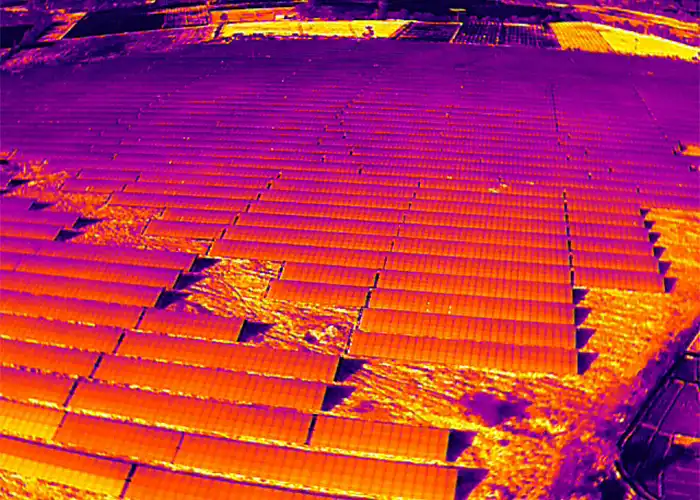
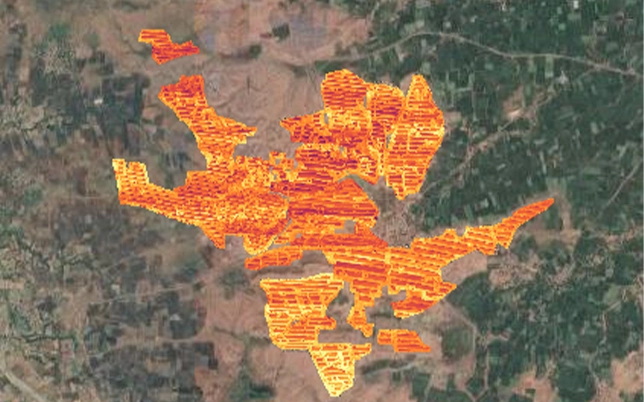
- Full terrain data richness: orthomosaic, DEM/DTM, contour, vegetation index, slope in a single survey
- GIS/CAD-ready outputs compatible with AutoCAD, ArcGIS, PVsyst, and QGIS
- Licensed operations compliant with UAS Rules 2021. Full liability insurance included
- 60× faster than Total Station/DGPS — 1,000 acres surveyed in days, not weeks
- Access to sites with dense vegetation, thorn terrain, steep gradients, and waterlogged boundary zones
- No subcontracting. All assignments executed by Lesoko-employed DGCA Remote Pilot Certificate holders
- Pan-India deployment — single vendor for multi-site EPC portfolios
Drone Survey vs Traditional Methods
Why Drone Survey Wins — Every Time
The comparison isn’t close. Drone-based ground mount solar surveys eliminate the speed, accuracy, and access limitations of both DGPS and Total Station methods.
| Parameter | Lesoko Drone Survey | DGPS Survey | Total Station |
|---|---|---|---|
| Time for 1,000 acres | 4 working days | ~30 working days | ~25 working days |
| Accuracy | <1cm (sub-centimetre) | 3–5cm | 5–10cm |
| Control points needed | <200 for 1,000 acres | 10,000+ | 8,000+ |
| Grid adjustability | Fully adjustable (1m–10m) | Fixed grid only | Fixed grid only |
| Vegetation index / tree count | ✓ AI-powered NDVI | ✗ Not available | ✗ Not available |
| Inaccessible terrain coverage | ✓ Full coverage | ✗ Gaps in data | ✗ Gaps in data |
| PVsyst-compatible DEM | ✓ Included | Partial | Partial |
| AutoCAD DWG export | ✓ Standard | Extra cost | Extra cost |
Technical Depth
Methodology and Quality Assurance
Flight altitude, image overlap percentage, and GSD (Ground Sampling Distance) are calibrated to the project’s required output resolution. Typically 2–3 cm/pixel for solar site feasibility work. GCP density is adjusted based on terrain type: flat agricultural land requires fewer control points than hilly or multi-gradient sites. For projects requiring maximum positional accuracy in signal-constrained terrain, PPK (Post-Processing Kinematic) processing is available as an alternative to live RTK particularly useful on sites where satellite connectivity is inconsistent.
Post-flight, SfM processing generates a dense point cloud from which the orthomosaic, DEM, and DSM are derived simultaneously. Accuracy validation runs at every stage: GCP residuals are checked against tolerance thresholds, and independent checkpoints verify the final DEM before delivery. On active or partially installed sites, morning and late-afternoon flight windows reduce solar panel glare and shadow interference during image capture. Client data is delivered exclusively to the commissioning team.
- Georeferenced Orthomap (sub-centimetre accuracy)
- Topolayout Map for row orientation planning
- Digital Elevation Model (DEM)
- Contour Maps at 0.1m / 0.5m / 1.0m intervals
- NDVI Vegetation Index & AI tree count
- Slope Percentage Map
- Bund Cut/Fill Volume Calculations
- AutoCAD DWG + KMZ/KML + GeoTIFF exports
Technical Review
Survey methodology reviewed by Lesoko's DGCA Remote Pilot Certificate holders with operational solar survey experience across Gujarat desert terrain, Karnataka hill gradients, Rajasthan large-site logistics, and Tamil Nadu coastal scheduling and verified against multi-state project deployments.
Audience
Who this service is for
EPC Contractors
- Responsibility: Site feasibility, structural layout design, civil engineering preparation for ground mount solar projects
- Core challenge: Inaccurate topographic data causes layout errors, drainage failures, and structural rework discovered during construction
- Operational value: 4-day delivery, GIS/CAD-ready data, topolayout for panel placement, contour for civil estimation
Solar Project Developers / IPPs
- Responsibility: Site selection, feasibility documentation, lender technical reporting for independent power projects
- Core challenge: Manual surveys miss terrain complexity, vegetation density, and drainage risk all material to project finance models
- Operational value: Vegetation index, slope analysis, and DEM for PVsyst simulation, shadow studies, and environmental reporting sized for utility-scale projects above 50 MW. See also: drone construction monitoring for the next project phase.
Lender Technical Advisors
- Responsibility: Technical due diligence for project financing, asset acquisition, and asset transfer transactions
- Core challenge: Incomplete or inaccurate site documentation creates measurable financial and technical risk at underwriting
- Operational value: Geo-accurate orthomosaic, contour maps, and comprehensive survey reports meeting lender-grade documentation standards for project finance due diligence
Pan-India Survey Deployment
Pan-India operations with deployment capability within 48 hours for sites above 50 MW equivalent area. Completed projects across Tamil Nadu, Karnataka, Gujarat, Rajasthan, Maharashtra, Andhra Pradesh, Telangana, and Madhya Pradesh. Same-day deployment available in Chennai, Bengaluru, Hyderabad, and Ahmedabad for urgent requirements.
Dedicated geo-specific coverage for major solar clusters: Gujarat (Charanka, Banaskantha), Rajasthan (Bhadla, Jodhpur), Karnataka (Pavagada), Andhra Pradesh (Kurnool).
Each terrain presents distinct operational requirements: Rajasthan desert sites require dust-adjusted flight planning and post-flight image quality screening. Karnataka hilly terrain requires higher GCP density and additional accuracy checkpoints. Tamil Nadu coastal sites factor monsoon season ground saturation into GCP placement and scheduling.
- Gujarat
- Rajasthan
- Tamil Nadu
- Karnataka
- Maharashtra
- Andhra Pradesh
- Madhya Pradesh
- Uttar Pradesh
- Odisha
- Punjab
- Haryana
- Uttarakhand
- Bihar
- Jharkhand
- Chhattisgarh
- West Bengal
- Kerala
- Telangana
Ground Mount Solar Survey Is the First Step Every Solar Project Needs
Trusted By Industry leaders


Pricing
What Determines Survey Cost?
Project pricing is structured on a per-hectare or per-acre basis, with volume tiering for larger sites. The primary driver is site area larger projects receive proportionally lower per-hectare rates due to mobilisation efficiency.
Survey cost is typically a fraction of the rework and delay costs that result from inaccurate topographic data at feasibility stage with 2.3+ lakh hectares of survey experience, this is a consistent observation across project types.
To receive an accurate proposal, share your project area, site location, terrain type, and required deliverables. No upfront commitment required.
- Project area (hectares/acres): Primary driver larger sites receive lower per-hectare pricing due to fixed mobilisation costs
- Terrain complexity: Flat agricultural land surveys at lower cost than hilly, forested, or thorn-vegetation terrain requiring higher GCP density
- GCP density required: Higher accuracy requirements or complex gradients require additional control points, affecting field deployment time
- Deliverable depth: Standard deliverable set vs full-layer output including NDVI, slope raster, spot level grid, and additional processing
- Site location and access: Travel, mobilisation, and accommodation cost for sites in remote or multi-district project areas
- Timeline urgency: Standard 4-day delivery vs expedited turnaround for project-critical timelines
Report Samples
Sample Deliverable Previews
Request a Survey Proposal for Your Solar Site
Phone/ Whatsapp
+91 78457 26375/ 7845726374
Email Us
sales@lesoko.in
Head Office
T. Nagar, Chennai, Tamil Nadu 600017
Get a Scoped Proposal
Frequently Asked Questions
Drone ground mount solar survey delivers orthomosaic maps, digital elevation models (DEM/DTM), topolayout maps, contour maps, vegetation index (NDVI), slope analysis, and spot level surveys — all in GIS/CAD-native formats (GeoTIFF, DXF, KML, Shapefile). Together, these layers provide everything needed for solar array layout design, civil engineering input, and lender-grade site documentation.
Aerial photogrammetric survey with RTK GPS (or PPK where required) and verified Ground Control Points achieves <1cm accuracy. Comparable to Total Station and DGPS results. The key advantage is data richness: drone survey delivers orthomosaic, DEM/DTM, vegetation index, and slope data in a single operation, while Total Station captures only spot levels and basic contour. Survey speed is also 60× faster, with adjustable grid resolution versus a fixed conventional grid.
Complete reports are delivered within 4 days for a 1,000-acre site from flight execution through to final deliverables. Total Station/DGPS surveys typically take approximately 30 days for the same area. Expedited delivery is available for project-critical timelines. Pan-India deployment is possible within 48 hours for sites above a defined project threshold.
Yes. Drone survey accesses dense forest, thorn vegetation, steep gradients, and waterlogged terrain that Total Station teams cannot safely reach. Heavy canopy requires additional processing to separate the Digital Surface Model (DSM) from the true bare-earth Digital Terrain Model (DTM). This additional requirement is assessed during pre-survey site review and factored into timeline and cost before deployment.
Yes. Orthomosaic and DEM outputs can be imported into PVsyst for 3D scene creation, shadow analysis, and energy yield simulation. Slope analysis and topolayout maps directly support panel tilt optimisation and row spacing design. Project developers typically complete feasibility energy modelling before committing to detailed engineering. Catching layout and shading issues before pile foundations are specified.
Ground Control Points (GCPs) are precisely surveyed physical markers distributed across the site before drone flight. They anchor aerial imagery to real-world geographic coordinates, ensuring the orthomosaic, DEM, and contour outputs are spatially accurate and not subject to positional drift. GCP density is calibrated to terrain complexity flat agricultural sites require fewer control points than hilly or multi-gradient terrain. Independent checkpoints verify the final DEM against tolerance thresholds before the report is delivered.
A Digital Surface Model (DSM) captures the elevation of everything visible from above including tree canopy, shrubs, and existing structures. A Digital Terrain Model (DTM) represents the bare-earth ground surface only. For solar site planning, the DTM is the critical input for structural foundation design, drainage engineering, and earthwork volume estimation. On sites with dense vegetation, SfM processing separates the DSM from the bare-earth DTM. A step that is scoped during pre-survey review and factored into the project timeline.
Ground Sampling Distance (GSD) is the real-world size represented by one pixel in the orthomosaic typically 2–3 cm/pixel for solar site feasibility surveys at standard flight altitude. Lower GSD means higher spatial resolution and more precise terrain modelling. GSD is determined by flight altitude and camera sensor specification, and is calibrated to the project’s required output resolution before each flight. Higher-resolution surveys are specified when finer structural detail is required, such as for pile foundation design on complex terrain.
Yes. Georeferenced orthomosaic, DEM, contour data, and the comprehensive survey report meet lender-grade documentation standards required for project finance due diligence, asset acquisition, and technical review by independent engineers. The survey report includes full accuracy validation, GCP residuals, flight parameters, and methodology documentation. NDA arrangements are available for sensitive projects at the proposal stage.