
Drone Survey for Wind Farm Development — Precision GIS & UAV Services Across India
Reduce site risk, optimise turbine placement, and accelerate environmental approvals — with engineering-grade drone survey for wind farm planning tailored to India’s wind corridors.
5 Lakh+
Drone Flights Completed
5cm
DTM accuracy (GSD)
60%
Faster than ground survey
₹210Cr+
Saved in O&M Costs
3×
More coverage per day
What we do
Wind Farm Drone Survey India — Why Site Data Quality Determines Project Success
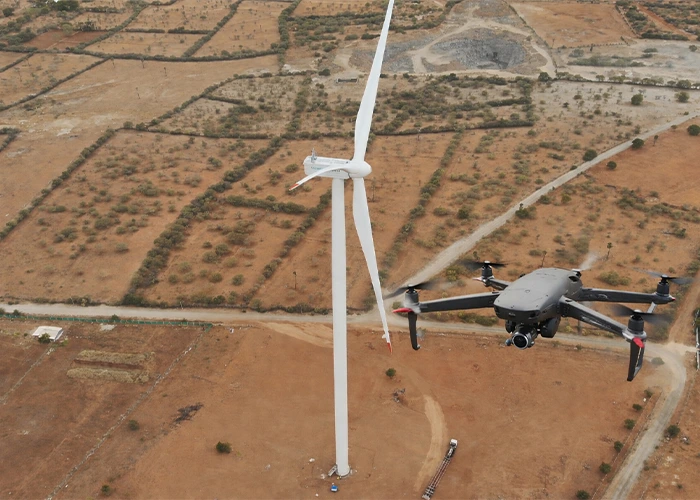
Lesoko provides professional Drone survey for wind farm development across India — deploying DGCA-certified UAV platforms with RTK/PPK GPS, LiDAR payloads, and photogrammetry workflows to deliver engineering-grade data for site selection, planning, and regulatory approvals.
In wind energy, a 10-metre elevation error in a DEM can shift micrositing decisions that affect decades of energy yield. India’s prime wind corridors. The ridgelines of Tamil Nadu, the plateaus of Rajasthan, the coastal plains of Gujarat, the Deccan traps of Karnataka each present unique survey challenges. The developer who arrives at pre-bid with high-resolution terrain and land data moves faster, bids more accurately, and closes financing more confidently.
- DGCA-certified pilots and RPAS-registered UAV fleet across India
- In-house GIS analysts, photogrammetry engineers, and LiDAR processing specialists
- Engineering-grade deliverables compatible with WAsP, WindSim, AutoCAD, and ArcGIS
- Active deployments in TN, Rajasthan, Gujarat, Karnataka, AP, and MP
- Full NOC, airspace permitting, and DGCA compliance managed by Lesoko
- 48-hour RFQ turnaround for pre-bid and urgent project requirements
"Every week of survey delay at pre-feasibility compounds into months of project schedule risk. The cost of a drone survey is recovered in the first engineering decision it improves."
Our solutions
Drone Survey for Wind Farm — Services for Every Project Phase
From pre-feasibility site screening to detailed engineering survey, our integrated drone GIS mapping for wind energy workflows are designed around the specific data requirements of wind development in India.
🔶 Land feasibility survey
Drone-based cadastral overlay, slope analysis, and multi-class land-use classification to assess acquisition viability before your team commences on-ground negotiations. Identifies fragmented holdings, unmapped seasonal watercourses, legal encumbrances, and scheduled area boundaries with precision that traditional revenue map interpretation cannot match.
Our GIS-based site selection surveys help you navigate land use constraints, map meteorological data with geospatial data, and identify optimal turbine placement zones before committing to acquisition.
- Cadastral overlay
- Land-use classification
- Slope analysis
- Encumbrance mapping
🔶 Environmental impact mapping
Multi-spectral drone surveys for NDVI-based vegetation mapping, wetland and water body delineation, habitat sensitivity classification, and CRZ/scheduled area boundary mapping. Datasets are produced in formats directly usable for ESIA reports, MoEFCC and State PCB submissions — reducing environmental clearance timelines by weeks compared to conventional field survey methods.
- NDVI mapping
- ESIA-ready datasets
- Wetland delineation
- Habitat classification
🔶 Terrain and topographical survey
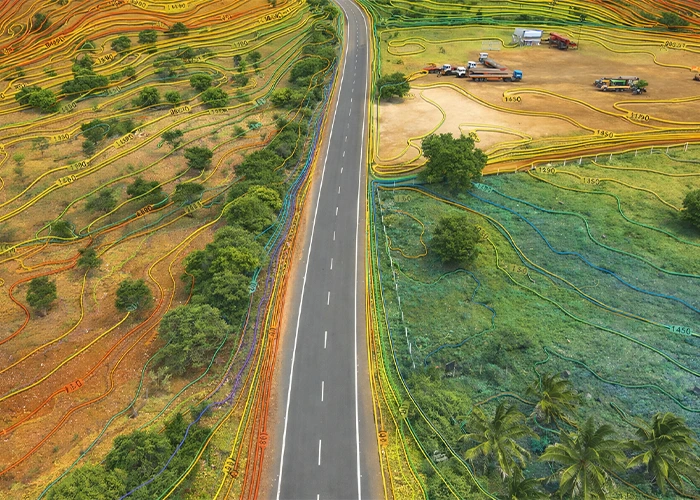
High-accuracy DTM and DSM generation at 5–10 cm GSD, with contour mapping at 1 m intervals, slope-aspect analysis, and terrain roughness classification. Our Digital Terrain Models help you and your consultants visualise topography, identify wind flow obstacles, and detect transmission line constraints during the planning stage before a single rupee is committed to civil works.
Outputs feed directly into WAsP and WindSim for wind flow modelling, resolving sub-turbine-height terrain features that satellite DEM cannot capture.
- DTM / DSM
- 1m contour lines
- LiDAR point cloud
- Orthomosaic
🔶 Access route planning
End-to-end corridor analysis for WTG component transport — nacelle and blade sweep clearance modelling, critical bend radius mapping, gradient profiling, and bridge load assessment using drone-derived 3D terrain models. Our surveys also map existing transmission lines and grid connection routes to identify any obstacles that could hinder installation logistics.
Prevents costly on-site modifications and blade transport incidents that result from access surveys conducted too late in the project cycle.
- 3D corridor model
- Gradient profile
- Clearance analysis
- Route GIS layer
From Mobilisation to Deliverable
A standard Lesoko engagement runs 3–4 weeks from contract signature to final deliverable, including permitting. Expedited timelines are available for pre-bid situations.
Scope definition and flight plan
DGCA NOC and airspace coordination
UAV mobilisation and GCP deployment
Photogrammetry / LiDAR data processing
GIS layer generation and QA validation
Deliverable handoff and client review
Drone + GIS advantage
How Drone GIS Mapping Improves Wind Energy Project Planning in India
Traditional ground survey and satellite imagery cannot resolve the micro-terrain features that matter most in wind site assessment. Wind shear behaviour at hub height is strongly influenced by terrain features at 10–50 m scale — ridgeline undulations, forest canopy height, shallow valleys between proposed pad locations.
Drone photogrammetry and LiDAR capture these features at engineering precision. Integrated with GIS platforms, the resulting datasets feed directly into wind flow models, turbine micrositing tools, and transmission route optimisation — compressing weeks of iterative desktop work into days. Every Lesoko survey flight is planned with mission-specific GCP density, overlap parameters, and payload selection to match the exact precision requirement of your deliverable.
Compatible with your workflow
All Lesoko deliverables are formatted for direct ingestion into WAsP, WindSim, AutoCAD Civil 3D, ArcGIS, QGIS, and standard EPC design workflows. We match output CRS to client specification as standard.
Horizontal accuracy with RTK/PPK GPS and adequate GCPs
Typical field mobilisation for a 300–600 ha survey
Coverage rate vs. equivalent total station ground survey
Typical AEP improvement from precision micrositing
Real-World Engagements Across India
Illustrative scenarios based on the types of survey challenges Lesoko resolves for EPC contractors, wind developers, and project teams across India’s wind energy states.
Ridgeline Turbine Micrositing — Competitive Pre-Bid Survey
An EPC contractor required high-resolution terrain data along a 4.2 km ridgeline to validate turbine spacing and assess wake interaction before committing to a competitive bid. Lesoko completed a 380-hectare LiDAR and photogrammetry survey in 3 days, delivering DTM, classified point cloud, and contour data at 1 m intervals.
Two pad locations identified for relocation, saving an estimated ₹1.2 crore in post-construction foundation correction.
Multi-Village Cadastral Overlay — Land Fragmentation Analysis
A wind energy developer needed to assess land fragmentation across 11 revenue villages before initiating acquisition. Drone-based orthomosaic mapping at 8 cm GSD, overlaid with digitised revenue maps, identified critical encumbrances in 3 villages and flagged an unmapped seasonal nala bisecting two proposed turbine pads.
Land team restructured negotiations 6 weeks ahead of schedule, avoiding two high-risk parcels entirely.
ESIA Baseline Mapping — 50 MW Coastal Zone Project
An IPP engaged Lesoko to generate pre-construction environmental baseline data for a 50 MW project in a CRZ-adjacent zone. Multi-spectral drone surveys mapped NDVI zones, CRZ boundaries, and mangrove extent at 10 cm resolution — data that directly supported the ESIA report submitted to MoEFCC.
Environmental clearance timeline reduced by an estimated 8–10 weeks compared to conventional survey methods.
Survey Data in Action — Real Projects Across India
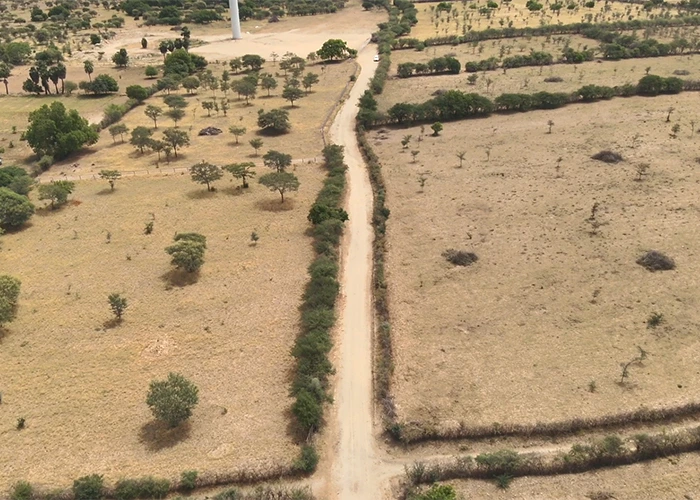
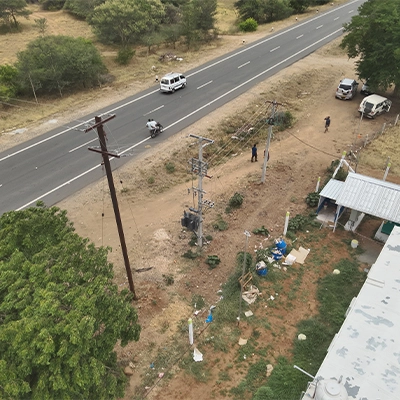
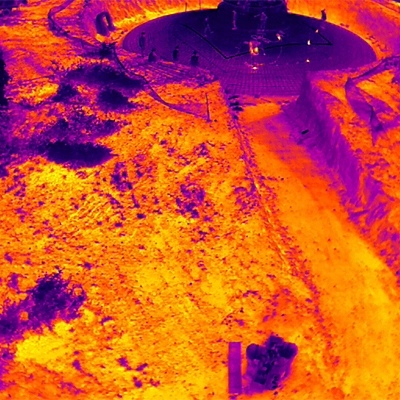
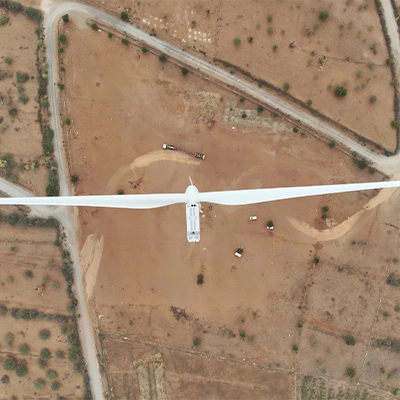
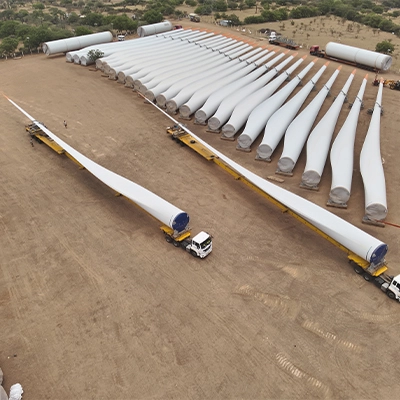
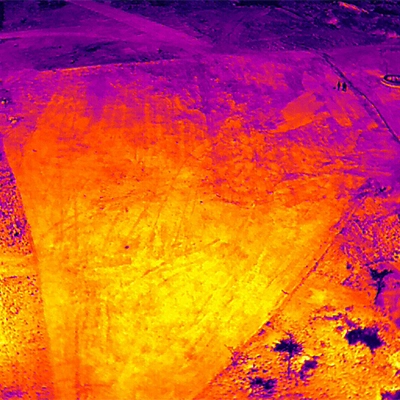
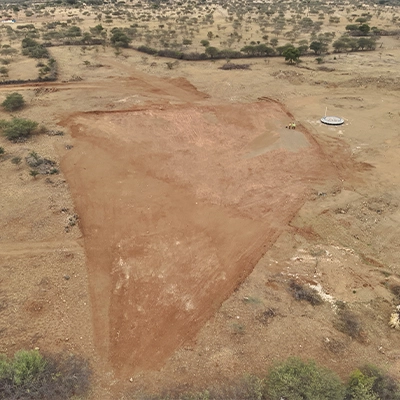
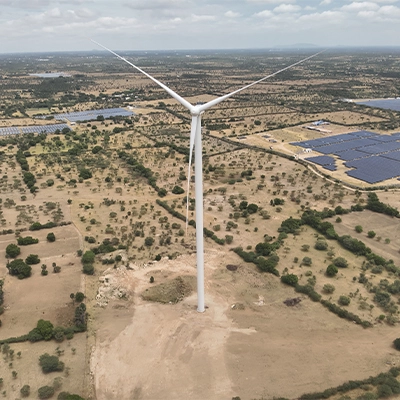
Every image below is captured from an actual Lesoko drone survey flight. This is what your project deliverables look like.
Why Better Site Data Compounds Across Every Phase
Precision micrositing
Accurate terrain models enable turbine placement that accounts for actual wind shear and wake interaction, improving net AEP estimates by 3–8% directly improving tariff competitiveness.
Faster approvals
Environmental baseline data generated by drone reduces MoEFCC consultation time. Access route surveys eliminate costly blade transport incidents and on-site modifications.
Reduced acquisition risk
Identifying land encumbrances and fragmented holdings before negotiations begin prevents costly rework. Developers renegotiate from strength, not surprise.
Stronger lender due diligence
Defensible, auditable geospatial datasets give lenders and equity investors confidence in the site data underpinning the project's energy yield forecast and financial model.
Compressed project timeline
Survey data delivered 3–4 weeks after mobilisation rather than the 3–4 months typical of traditional ground survey at equivalent coverage.
Foundation cost optimisation
Accurate slope and bearing capacity mapping reduces WTG foundation over-design. On a 100 MW project, the value of better site data routinely exceeds survey cost by 20–50×.
Value of better site data over survey cost.
20–50×
Value of better site data over survey cost. Across a 100 MW wind project, compounded savings from optimised micrositing, reduced acquisition rework, faster approvals, and prevented transport incidents routinely exceed the drone survey cost by 20–50 times. A survey is not an expense — it is your first capital deployment decision.
Survey Data in Action — Real Projects Across India
Every image below is captured from an actual Lesoko drone survey flight. This is what your project deliverables look like.
Why Lesoko
The technical partner built for India's wind sector
We are not a generic drone company that maps wind farms occasionally. Every aspect of our team, fleet, and workflow has been built around the specific requirements of wind energy survey in India.
Fully DGCA-certified operations
All Lesoko operations are conducted under DGCA-certified Remote Pilots with RPAS-registered aircraft, in full compliance with MoCA Drone Rules 2021 and the Digital Sky framework. We manage the complete NOC workflow including AAI coordination and state authority filings — as part of every engagement.
Pan-India deployment capability
Active operations across Tamil Nadu, Rajasthan, Gujarat, Karnataka, Andhra Pradesh, and Madhya Pradesh. Our teams are familiar with the terrain, logistics, and permitting environment of India's major wind corridors, including remote ridgeline access in mountainous terrain.
In-house GIS and LiDAR expertise
Unlike survey companies that outsource GIS processing, Lesoko's in-house team includes photogrammetry engineers, LiDAR point cloud specialists, and GIS analysts who understand wind energy data requirements. This means faster turnaround, higher QA rigour, and deliverables optimised for your specific downstream use case.
Engineering-grade outputs, every time
Standard deliverables include high-resolution orthomosaic (GeoTIFF), DTM, DSM, classified LiDAR point cloud (LAS/LAZ), contour lines (DXF/SHP), slope rasters, and vector GIS layers (SHP/KML/KMZ/GeoJSON). All data is referenced to WGS84/UTM and delivered in client-specified coordinate systems.
Trusted By Industry leaders












Ready to survey your wind project site?
Phone/ Whatsapp
+91 78457 26375/ 7845726374
Email Us
sales@lesoko.in
Head Office
Request a Survey Quote
What wind developers and EPC teams ask us
Drone survey for wind farm projects is priced based on site area, terrain complexity, deliverable type, and survey purpose. A pre-feasibility survey of 200–500 hectares typically costs significantly less than equivalent ground survey while delivering superior data resolution. Contact Lesoko with your project area and stage for a site-specific quote within 48 hours.
With RTK/PPK GPS and adequate ground control points, drone photogrammetry achieves horizontal accuracy of ±3–5 cm and vertical accuracy of ±5–10 cm. LiDAR surveys achieve ±2–5 cm vertical accuracy in forested terrain. Both significantly outperform theodolite surveys in large-area coverage and are comparable to total station surveys for most wind project applications.
Yes. Under MoCA Drone Rules 2021 and the Digital Sky framework, all commercial UAV operations require DGCA-registered aircraft, certified Remote Pilots, and prior NOC from the relevant airspace authority. Lesoko manages the entire compliance and permissions workflow — including AAI coordination and state authority filings — as part of every engagement.
Field operations for a 300–600 hectare topographical survey typically take 2–4 days of mobilised flying time. Processing, QA, and GIS deliverable preparation adds 5–10 working days. From contract signature to final deliverable, a standard engagement runs 3–4 weeks including permitting. Expedited timelines are available for pre-bid situations.
Standard deliverables include high-resolution orthomosaic (GeoTIFF), DTM, DSM, contour lines (DXF/SHP), classified LiDAR point cloud (LAS/LAZ), slope and aspect rasters, and vector GIS layers (SHP/KML/KMZ/GeoJSON). All data is referenced to WGS84/UTM and delivered in client-specified coordinate systems. Custom outputs for WAsP, WindSim, and EPC design workflows are available on request.
Photogrammetry uses overlapping drone images to build a 3D terrain model — highly cost-effective for open, vegetation-free sites like Rajasthan and Gujarat plateaus. LiDAR uses laser pulses that penetrate vegetation canopy to capture the bare-earth surface beneath — essential for forested ridgelines in Karnataka, Tamil Nadu, and the Western Ghats. LiDAR is recommended for any site with tree cover exceeding 30%, as bare-earth DTM accuracy directly influences foundation design and wind flow modelling.
Drone surveys and wind resource assessments serve different but complementary roles. A WRA measures actual wind speed, direction, and shear at hub height over 12–24 months. A drone survey generates the high-resolution terrain data that feeds into the wind flow model used to extrapolate WRA measurements across the full project area. Without accurate terrain data, the wind flow model introduces AEP estimation errors. Lesoko’s DTM, roughness classification, and obstacle mapping makes your WRA-derived energy yield calculations bankable and defensible to lenders.
Yes. Lesoko provides multi-spectral drone surveys for NDVI-based vegetation mapping, water body and wetland delineation, habitat classification, and CRZ boundary mapping. These datasets are produced in formats directly usable for ESIA reports, MoEFCC submissions, and State PCB consultations — across coastal, semi-arid, and forested wind zones in India.
Lesoko works across the full wind energy project spectrum — IPPs and developers at pre-feasibility and detailed survey stages; EPC contractors at pre-bid, civil design, and construction monitoring phases; infrastructure consultants; land acquisition firms; and project management consultants. We structure deliverables to match each client’s specific stage and use case.
Lesoko outputs are natively compatible with WAsP, WindSim, AutoCAD Civil 3D, ArcGIS, QGIS, and Pix4D. Point clouds are delivered in LAS/LAZ format compatible with all major LiDAR processing platforms. We match the output coordinate reference system to client specification as standard, at no additional charge.