
Drone Solar Panel Inspection Services for Solar Power Plants
Hotspots, bypass diode failures, and micro-cracks drain your plant’s output before you notice. Detect every fault in a single flight with thermal + RGB drone inspection trusted across 34+ GW of solar assets in India. Report in 48 hours. DGCA certified.
5L+
Drone Flights Completed
34+ GW
Solar Capacity Inspected
99%
Defect Detection Accuracy
₹210Cr+
Saved in O&M Costs
11K+
Rooftop Surveys
Why Solar Plants Lose Output — And How Drones Fix It
Solar power plants degrade silently. A hotspot forming on one module, a bypass diode failing in a string, or dust accumulating unevenly across rows — none of these trigger alarms, yet together they can reduce your plant’s output by 10–25% before a single fault is logged.
Traditional manual inspection simply cannot keep up. Walking thousands of panels takes weeks, misses thermal faults entirely, and exposes workers to real height and electrical risks.
Drone-based solar panel inspection changes this. A single flight covers your entire plant in hours — capturing panel-level thermal and visual data, processed by AI into an actionable defect report. Having completed over 34+ GW of solar inspections across India, Lesoko delivers the accuracy, speed, and data depth that modern O&M teams demand.
What is Drone Solar Panel Inspection?
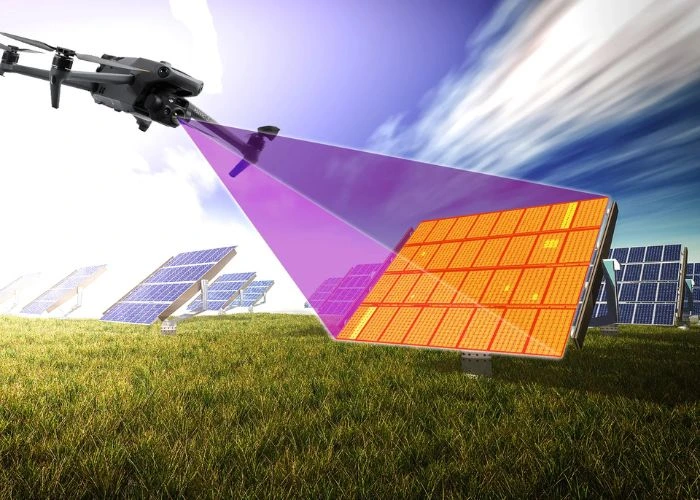
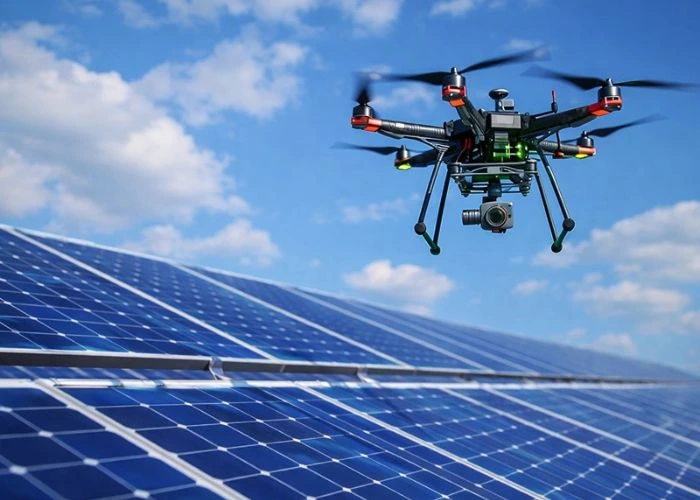
Drone solar panel inspection is an aerial assessment method using UAVs equipped with calibrated thermal infrared (IR) and high-resolution RGB cameras to evaluate the condition of solar power plants at panel level.
Unlike manual ground checks, drone-based inspection captures thermal and visual data across an entire site in a single automated flight — detecting hotspots, micro-cracks, bypass diode failures, and electrical faults that are invisible to the naked eye.
Solar plant operators can identify hotspots, cracked modules, open circuits, dust accumulation, shading anomalies, and PID across thousands of panels simultaneously. A geo-tagged, AI-analyzed defect report is delivered within 48 hours of the flight.
Thermal Drone Technology for Solar Panel Inspection
Thermal drone technology is the foundation of modern drone solar panel inspection services. Our radiometric thermal cameras comply with IEC 62446-3 — the international standard for aerial thermographic inspection of photovoltaic (PV) systems — ensuring every inspection delivers data that meets global quality benchmarks.
Using drone thermography, our UAVs scan large solar power plants and identify hotspots, overheating cells, faulty photovoltaic modules, and electrical faults that reduce energy production. The radiometric thermal camera used in every Lesoko inspection detects temperature variations with 0.05°C sensitivity — capturing heat anomalies invisible to RGB cameras and completely undetectable by manual ground inspection.
For detailed cell-level crack detection beyond thermal imaging, EL (Electroluminescence) imaging is available as an add-on — capturing micro-cracks and internal cell fractures invisible even to infrared cameras. Beyond fault detection, drone thermography for solar panels enables predictive maintenance — identifying photovoltaic components approaching failure before they cause generation loss. This makes solar PV inspection by drone not just a maintenance tool but a revenue protection strategy for plant operators across India.
How Drone Solar Panel Inspection Works
Flight Planning
Our experts analyse your solar plant layout and program automated UAV flight paths ensuring 100% panel coverage, DGCA compliance, and optimised flight time for your site.
Aerial Scanning
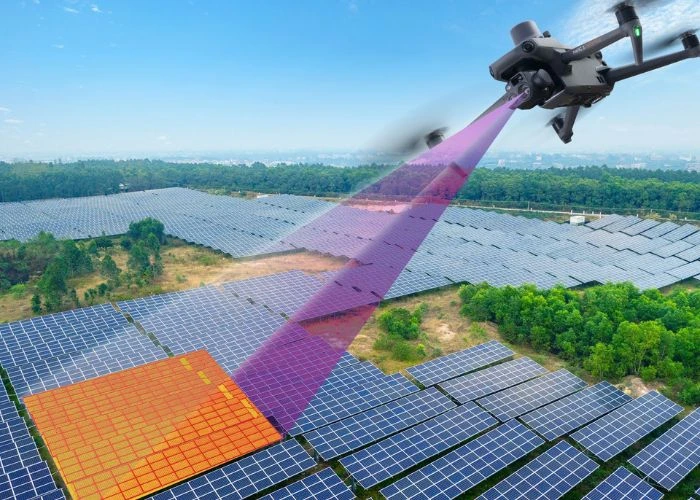
RTK drones fly pre-programmed routes capturing simultaneous radiometric thermal IR and high-resolution RGB imagery at panel-level resolution across your entire installation.
AI Data Analysis
Captured data is processed through AI-powered defect detection algorithms that automatically classify faults by type, severity, and location across all panels.
Report Delivery
A geo-tagged inspection report with thermal images, defect severity maps, and prioritised maintenance recommendations — delivered to your dashboard within 48 hours of the flight.
Solar Panel Defects Detected by Drone Inspection
We identify and severity-rate 9 critical PV defect types — enabling precise, prioritised maintenance decisions across every panel in your plant.
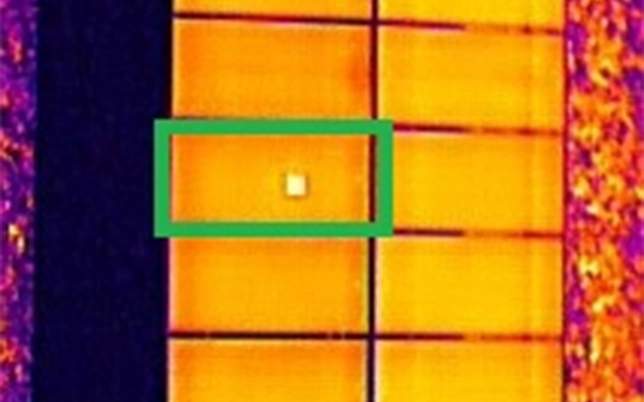
Hotspot
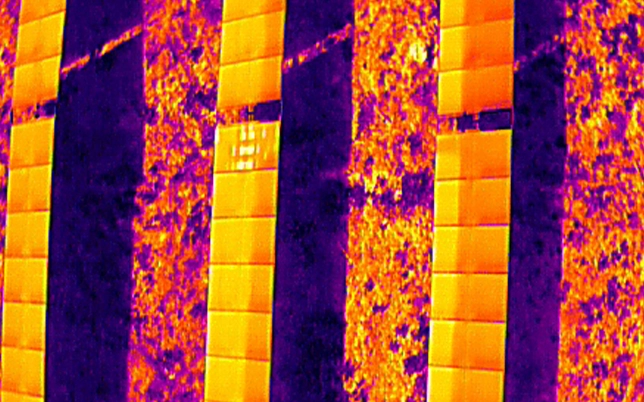
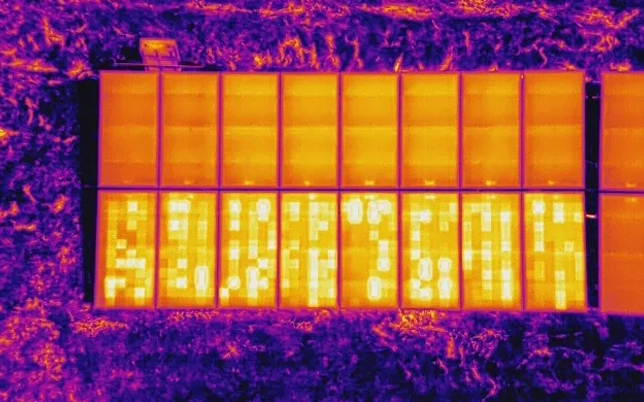
Multiple hotspots
String Reverse Polarity
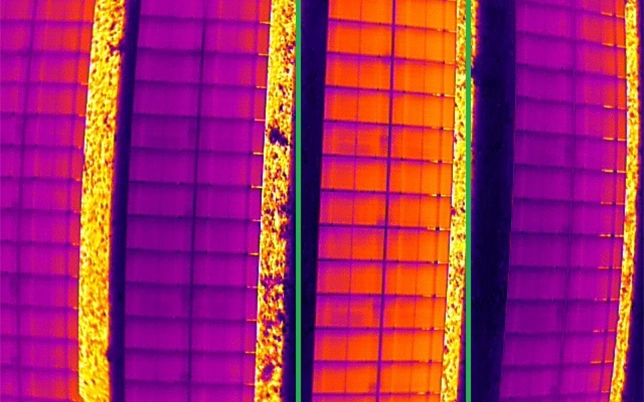
Open circuit
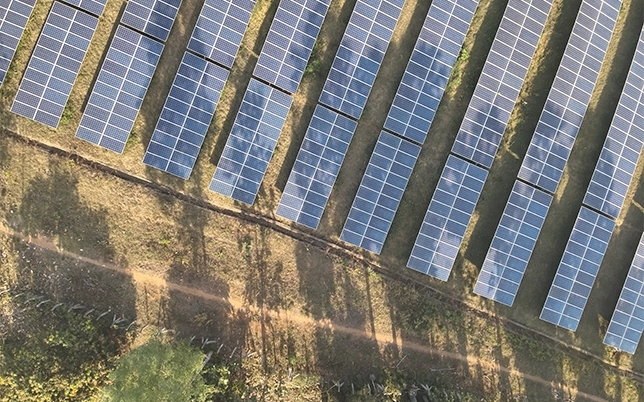
Shadow
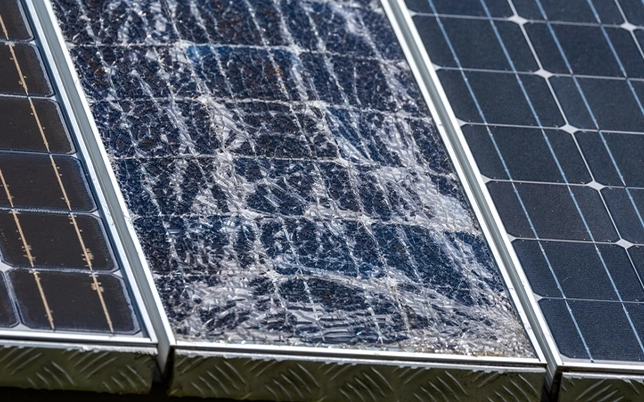
Damage
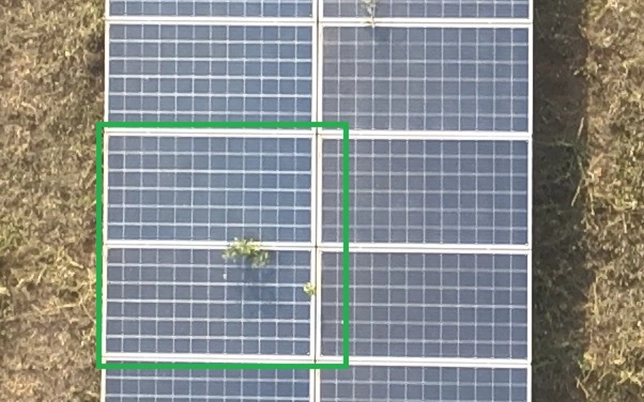
Vegetation Overgrowth
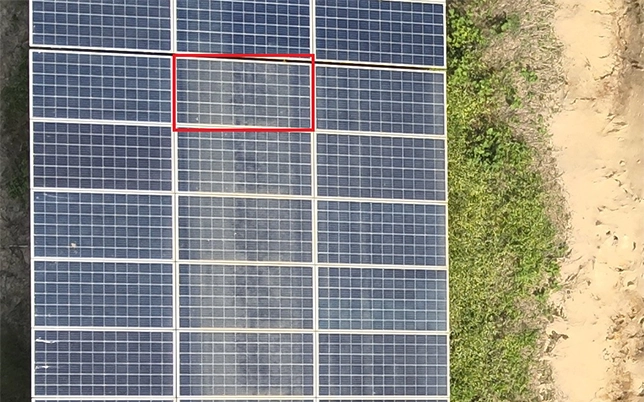
Dust & Soiling
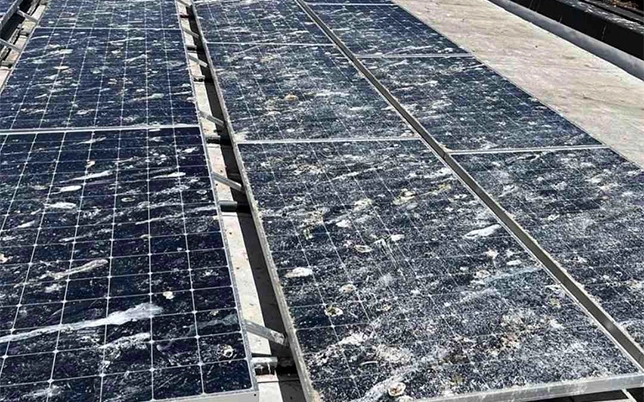
Bird Droppings
Benefits of Drone Solar Panel Inspection
75% Faster Than Manual
A 50 MW plant that takes weeks to inspect manually is completed in a single day. No waiting, no weather delays from scaffolding setup.
100% Panel Coverage
Every panel in your plant is assessed — not a 10–25% sample. No fault gets missed because a worker skipped a row.
Thermal Faults Detected
Hotspots, bypass diode failures, and cell degradation are invisible to visual inspection. Thermal imaging finds them before they become revenue losses.
45% Lower Cost Per MW
Eliminating manual labour, travel time, and multi-day site stays makes drone inspection significantly more cost-effective especially for large plants.
Zero Safety Risk
No workers on panels. No height risks. No electrical exposure. Drone inspection eliminates the HSE liability that comes with traditional methods.
AI-Powered Defect Reports
Machine learning classifies every fault by type and severity. Your O&M team gets a prioritised action list — not a pile of raw images.
Service Areas
Drone Solar Panel Inspection Services Across India
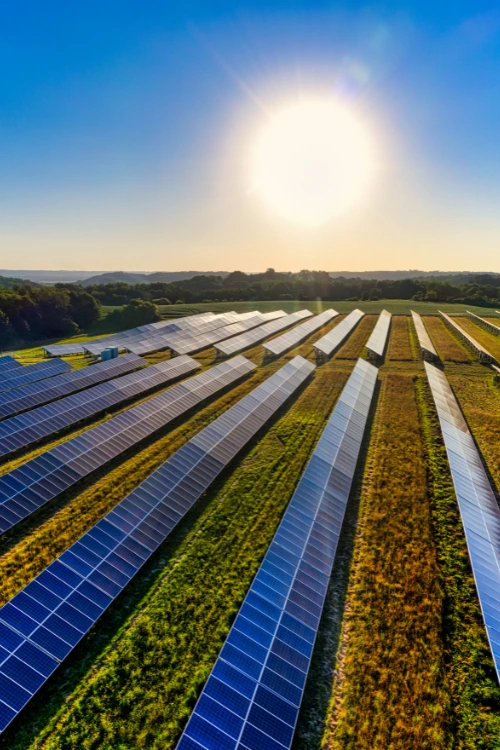
We provide professional drone solar panel inspection services across India — from large-scale ground-mounted farms in Rajasthan and Gujarat to commercial rooftop installations in Tamil Nadu, Karnataka, Telangana, Andhra Pradesh, Madhya Pradesh, Punjab and Maharashtra.
Our solar panel inspection services in Rajasthan cover plants across the Jodhpur, Barmer, and Jaisalmer solar corridors — India’s highest-irradiance zones where dust accumulation and extreme heat make bi-annual inspections essential. Our drone inspection services in Tamil Nadu and Karnataka support both utility-scale IPPs and commercial rooftop operators across the state’s rapidly growing solar capacity.
Solar Inspection Services for Every Segment
- Independent Power Producers (IPPs)
- EPC Contractors
- O&M Service Providers
- Commercial & Industrial Rooftop
- Solar Asset Investors
- Solar Developers
Drone Technology We Use for Solar Farm Inspection
Enterprise-grade hardware combined with AI-powered analytics — delivering inspection accuracy no manual team can match.
RTK-Enabled Drones
RTK-enabled UAVs are the backbone of accurate solar PV inspection by drone — providing the centimeter-level positioning needed to geo-tag every defective photovoltaic module to its exact string and row location.
Radiometric Thermal Camera
Calibrated IR cameras detect temperature variations with 0.05°C sensitivity — identifying hotspots, faulty cells, and overheating panels at scale across the entire plant.
AI Defect Detection
Proprietary machine learning algorithms automatically classify defects by type and severity across thousands of panels — delivering 99% detection accuracy.
GIS Mapping & Analytics
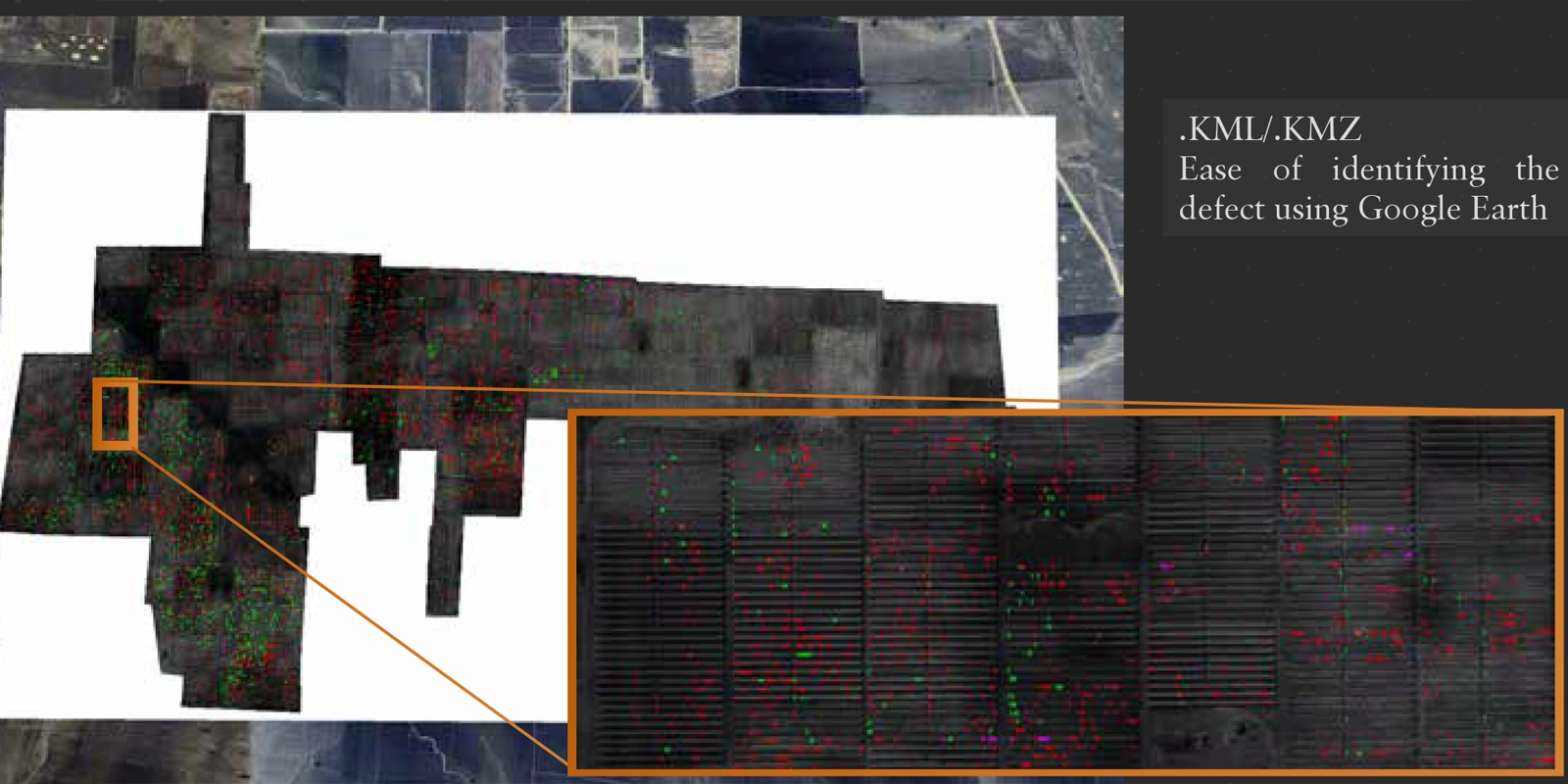
GIS-integrated aerial solar panel inspection results allow asset managers to overlay defect data on plant layout maps — enabling precise, row-by-row maintenance planning across large photovoltaic installations.
How Often Should Solar Panels Be Inspected?
Solar panels should be inspected at least once a year to maintain optimal performance and catch faults before they become revenue losses. However, inspection frequency depends on your plant type, location, and operating conditions.
Plants in high-dust regions like Rajasthan and Gujarat — where soiling alone can reduce output by 15–20% — benefit from bi-annual inspections. Post-monsoon inspections are strongly recommended across all regions to identify storm damage, hail impact, and moisture ingress that accumulate silently during the monsoon season.
Inspection Report Deliverables
Every Lesoko inspection includes a data package — not just images.
Thermal IR + RGB Inspection Report
Side-by-side radiometric thermal and visual imagery for every identified defect with severity classification.
Geo-Tagged Defect Map
Every fault GPS-tagged on an interactive solar plant map — your O&M team knows exactly which panel to replace first.
PV Module Thermography Analysis
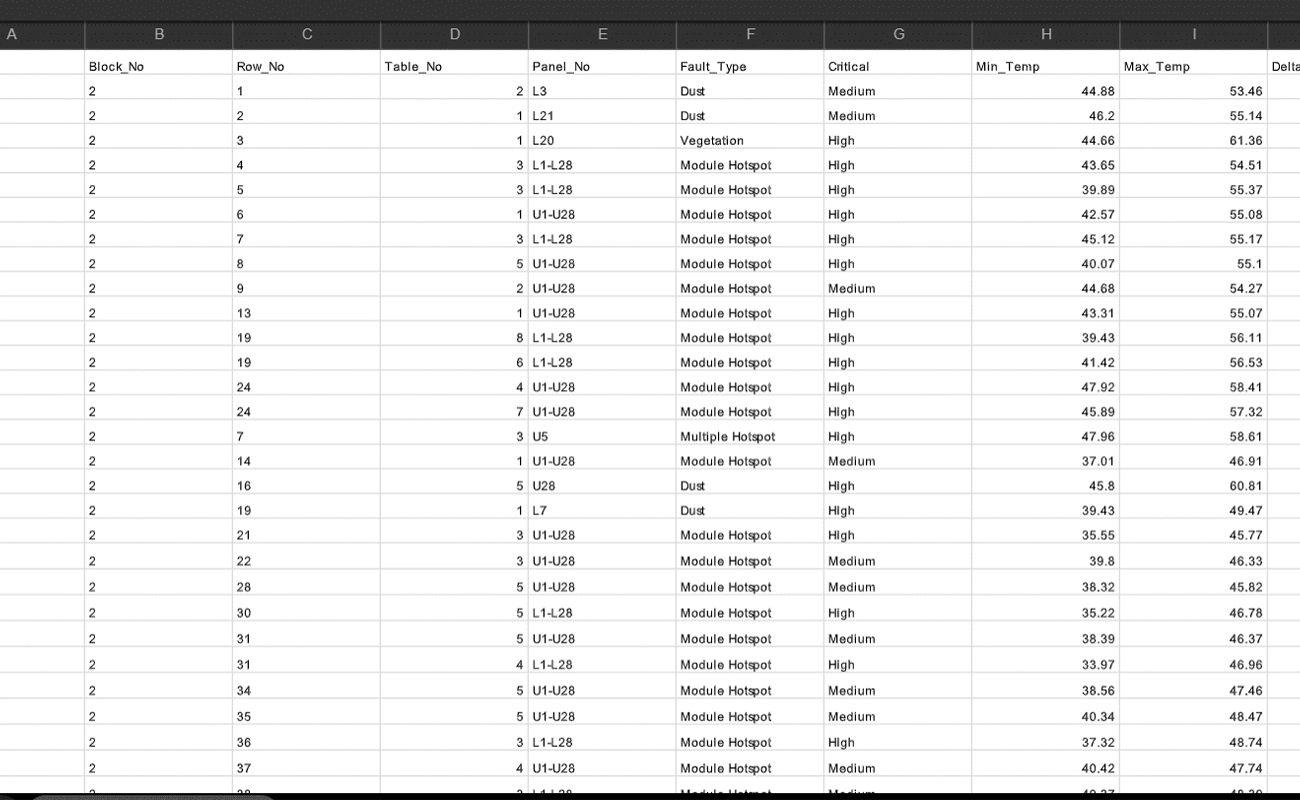
Infrared thermography of individual modules with temperature data, hotspot classification, and estimated power loss per fault.
Multi-Format Export
PDF report, Excel defect log, GIS files, and raw thermal image exports — compatible with your CMMS and asset management tools.
Trusted By Industry leaders












Drone Solar Panel Inspection Cost Per MW in India
Transparent per-MW pricing for utility-scale plants. Fixed packages for rooftops. No hidden costs — quote in 24 hours.
Commercial Rooftop
- Fixed package based on system size
- Thermal IR + RGB inspection report
- Geo-tagged defect map
- Report delivered in 48 hours
- DGCA-compliant flight operations
Utility-Scale Plant
- Per-MW pricing (lower rate at scale)
- Full thermal + RGB inspection report
- AI defect classification (9 fault types)
- GIS-integrated plant defect map
- Dashboard access included
- Multi-format data export
Annual O&M Contract
- Bi-annual or quarterly scheduling
- Volume pricing for multiple assets
- Priority scheduling & fast dispatch
- Trend analysis across inspections
- Dedicated account manager
What Solar Plant Operators Say

“Lesoko’s drone inspection identified 312 hotspots and 94 bypass diode failures across our 100 MW plant in just 2 days. Our manual team had walked the site 3 times and found nothing. The ROI was immediate.”
Asset Manager · 100 MW IPP · South India

“We use Lesoko for pre-commissioning inspection on every project now. The geo-tagged report and dashboard access makes contractor sign-off so much faster. Quality of delivery is consistently excellent.”
Project Director · Solar EPC Contractor · Gujarat

“Managing O&M across 6 solar plants becomes significantly easier with Lesoko’s annual inspection contracts. The prioritised maintenance recommendations alone save us at least 2 weeks of planning work per site per year.”
O&M Head · 6-Plant Portfolio · Rajasthan
Lesoko Dashboard
Lesoko Client Dashboard
Our Drone Solar Panel Inspection Services include a secure cloud-based client dashboard where solar plant operators can access inspection data, thermal images, and performance insights from anywhere.
The dashboard provides a clear overview of solar plant health, helping teams quickly identify defective panels and plan maintenance actions.
Dashboard Features
• Secure role-based access and login
• Geotagged defect detection on interactive solar plant maps
• RGB and thermal inspection images with severity classification
• AI-driven defect analytics and performance insights
• Prioritized maintenance recommendations
• Downloadable inspection reports (PDF, Excel, images, GIS files)
Data Security
All inspection data is securely stored and shared through authenticated access, following DGCA and ISO data security standards.
Get Free Quote in 24 Hours
Phone/ Whatsapp
+91 78457 26375
Email Us
Sales@lesoko.in
Visit Us
Trichy, Chennai
Get Your Inspection Quote
Frequently Asked Questions
Drone solar panel inspection uses UAVs equipped with thermal infrared (IR) and high-resolution RGB cameras to assess solar plants at panel level. Drones fly pre-programmed routes capturing simultaneous thermal and visual data. AI algorithms analyze this data to detect hotspots, cracked modules, bypass diode failures, soiling, and electrical faults invisible to ground checks. A geo-tagged report is delivered within 48 hours.
Drone inspections detect hotspots, multiple hotspots, bypass diode failures, open circuits, string reverse polarity, micro-cracks, delamination, soiling, dust accumulation, shading, vegetation overgrowth, bird droppings, and PID (Potential Induced Degradation) — all at panel level across the entire plant in a single flight.
A 10–50 MW plant is typically inspected in a single day. Drones cover 10–20 MW per day depending on site layout. A 100 MW farm is completed in 1–2 flight days. Compare this to manual inspection which takes 25+ hours per MW — a 100 MW plant would take weeks. Geo-tagged reports are delivered within 48 hours of the flight.
Pricing depends on plant size (MW), location, accessibility, and report type. We offer per-MW pricing for utility-scale plants and fixed packages for rooftops. Drone inspection typically costs 40–45% less than manual inspection when factoring in labour, time, and superior fault detection. Contact Lesoko for a project quote — most clients receive it within 24 hours.
Most solar plants benefit from at least one inspection per year. High-dust regions like Rajasthan and Gujarat benefit from bi-annual inspections. Post-monsoon checks are strongly recommended to catch storm and hail damage. Plants experiencing unexplained generation loss should be inspected immediately.
Yes. All Lesoko drone operations are fully compliant with DGCA regulations. Our pilots hold valid Remote Pilot Licences (RPL) and all flights are conducted with proper DGCA permissions — ensuring complete legal compliance across all states in India.
Yes. Drone inspections work for all solar installation sizes — from small 10 kW rooftop systems to 500 MW+ utility-scale farms. Lesoko has completed 11,000+ rooftop surveys and inspected over 34+ GW including commercial, industrial, and residential systems.
Drones equipped with radiometric thermal infrared (IR) cameras detect hotspots by measuring surface temperature differences across panels with 0.05°C sensitivity. When a cell is damaged, shaded, or has a bypass diode failure, it generates excess heat that shows as a bright area on the thermal image — invisible to the naked eye but clearly visible in thermal data. AI algorithms then classify these temperature anomalies by type and severity across all panels in the plant.